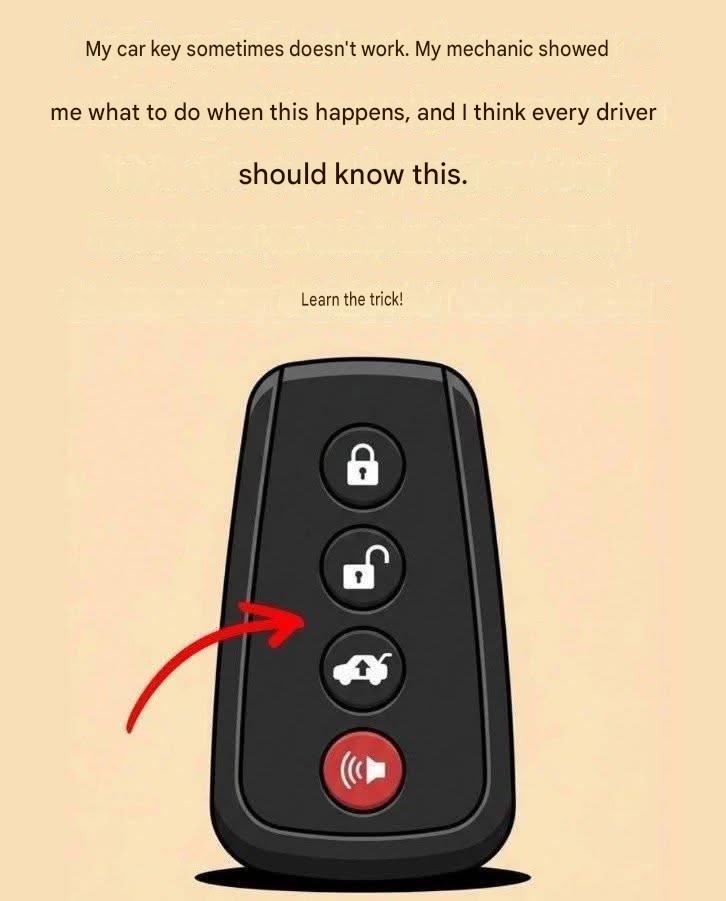
The One-Key Fallacy: Why Your Daily Routine Is a Ticking Time Bomb.
Most of us only think about our car keys when we’re frantically adjusting our steps and trashing the living room, or when a tiny plastic button suddenly gives up the ghost.
We treat this tiny piece of metal and plastic as absolute safety net in an uncertain world.
But what really gets us into big, expensive trouble isn’t the occasional moment of clumsiness, but the quiet, daily habit of relying solely on one key, one key fob, and a shaky plan.
We mindlessly toss it on the kitchen counter, toss it into bottomless shopping bags, and slowly drain our internal battery to its last drop, assuming it will last forever—until it stops working and suddenly everything around us collapses.
The truly helpful habit that will get you through a crisis isn’t knowing emergency tricks for stressful situations or memorizing locksmith phone numbers in the rain; it’s consciously developing an emergency plan that’s an integral part of your daily life long before disaster strikes.
This means keeping a spare key in a safe, permanent place that you can quickly access in an emergency.
It means regularly changing the battery in your car key, on a set schedule, instead of panicking when you’re rushing to an important meeting.
If your modern car allows it, take ten minutes to set up your smartphone as a digital key now, instead of putting it off indefinitely.
That way, when life inevitably throws you another unexpected obstacle, you won’t be standing helplessly, paralyzed, and desperate in a dark, empty parking lot—you’ll be calm, well-prepared, and in complete control of the situation.
We live in an age where we automatically back up our digital photos, work documents, and cell phone data, yet we routinely neglect the physical car key that’s essential for everyday mobility.
A modern car key is no longer just a piece of brass; it’s a complex electronic transponder that communicates with the vehicle’s computer via encrypted radio frequencies. If this sensitive connection fails—whether due to a faulty microprocessor, a dead battery, or flooding—the vehicle becomes a useless, multi-ton block of steel. By viewing the key as a fail-safe solution, we create a potential source of error.
A single key dropped on a concrete floor can quickly turn from a minor inconvenience into a logistical nightmare, requiring towing, workshop visits, and reprogramming costs reaching several hundred euros.
The psychology of single-key addiction is rooted in a false sense of security.
Because the key worked yesterday and the day before, our brains categorize it as a permanent fixture in our environment.
We ignore the diminishing range of the remote, the slight delay in starting the engine, and the subtle warning signals from our vehicles.
True preparation has nothing to do with paranoia, but rather with respecting the fragility of the tools we rely on every day.
By proactively managing access—testing spare keys, monitoring battery charge, and utilizing digital security—you protect not only your vehicle but also your time, peace of mind, and independence.
Next time you pick up your keys, don’t think of them as just a means of transportation.
See them for what they truly are: a system that needs a backup solution so a dead battery doesn’t ruin your day.