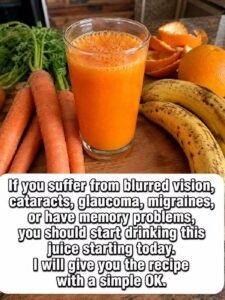
If you experience blurred vision, cataracts, glaucoma, migraines, or memory problems, it is important to seek appropriate medical evaluation. These symptoms should not be assumed to have a nutritional cause, and they should not be treated solely with dietary changes. A qualified healthcare professional can help determine what may be contributing to them and whether additional testing, treatment, or monitoring is appropriate.
This nutrient-rich smoothie has been generating interest as a simple way to add more vitamins, minerals, and antioxidants to the diet. Smoothies can be a convenient option for people who want to include a greater variety of colorful fruits and vegetables in their regular eating routine, especially when those foods might otherwise be difficult to consume consistently.
The goal is not to treat a medical condition with a drink, but rather to use nutrient-dense foods as part of an overall balanced diet. Fruits and vegetables naturally provide a combination of vitamins, minerals, plant compounds, water, and other nutrients that support normal body functions.
Try Fresh Juices and Nutrient-Rich Foods
Fresh juices and smoothies are often appealing because they provide a simple way to include fruits and vegetables in a convenient form. However, they are best viewed as additions to a varied diet rather than replacements for complete meals or professional medical care.
When preparing a smoothie, the natural colors of fruits and vegetables can also provide a useful visual reminder to include variety. Deep orange, red, green, and other brightly colored produce often contains different naturally occurring nutrients and antioxidant compounds. Eating a range of foods rather than depending on one ingredient helps create a broader nutritional pattern.
Feeling Tired More Often Than Usual
Feeling tired more often than usual? Struggling with low energy, difficulty concentrating, or dry, tired eyes? These symptoms can have many possible causes, and nutrition is only one part of the picture. Sleep habits, hydration, stress, daily activity, medications, and a variety of medical conditions may also influence how energetic or focused a person feels.
Persistent or unexplained fatigue deserves particular attention. If tiredness becomes severe, continues for an extended period, interferes with everyday activities, or occurs alongside other concerning symptoms, medical evaluation is appropriate rather than simply trying to correct the problem with food or supplements.
A nutrient-rich diet can nevertheless play an important role in maintaining healthy energy levels and supporting long-term eye health. The body depends on a steady supply of nutrients from food to carry out normal processes, and regularly eating a variety of nutrient-dense foods is one practical way to support those needs.
Rather than focusing on one so-called miracle ingredient, it is more useful to think about the overall dietary pattern. A smoothie can contribute useful nutrients, but it works best when it complements regular meals that also provide adequate protein, carbohydrates, fats, vitamins, minerals, and other essential nutrients.
A Simple Way to Increase Nutrient Intake
One simple way to increase your intake of essential vitamins and minerals is with a homemade smoothie made from colorful fruits and vegetables naturally rich in vitamin C, beta-carotene, antioxidants, and plant-based iron.
Using several naturally colorful plant foods in the same smoothie can bring together different nutritional qualities in one convenient drink. Vitamin C, beta-carotene, plant-based iron, and naturally occurring antioxidant compounds all have different roles in normal nutrition, so the value of the smoothie comes from the combination of foods rather than from expecting any single nutrient to produce dramatic results.
The homemade approach can also make it easier to keep the drink centered on the fruits and vegetables themselves. The purpose is simply to create a practical way of consuming nutrient-rich foods as part of an everyday eating pattern.
Vitamin C
Vitamin C is an essential nutrient commonly found in many fruits and vegetables. It contributes to several normal processes in the body and is also valued for its antioxidant properties. Including vitamin C-rich produce in meals and smoothies can therefore be part of a varied, nutrient-conscious diet.
Vitamin C is also relevant when plant-based sources of iron are eaten as part of a meal. Because the original smoothie combines the idea of vitamin C-rich produce with plant-based iron, these nutrients naturally fit together within a balanced dietary approach.
Beta-Carotene
Beta-carotene is a naturally occurring pigment found in many colorful plant foods. The body can use beta-carotene to produce vitamin A, a nutrient associated with normal vision and other essential body functions.
This does not mean that consuming more beta-carotene will reverse an existing eye disease. Cataracts, glaucoma, blurred vision, and other vision changes require appropriate medical assessment. Nutrient-rich foods can support normal nutritional needs, but they should not be presented as substitutes for diagnosis or treatment.
Antioxidants
Antioxidants are frequently discussed in connection with colorful fruits and vegetables. These foods naturally contain a variety of compounds that participate in the body’s nutritional and protective processes. For everyday eating, the practical message is straightforward: consuming a variety of plant foods helps provide a broader range of these compounds.
A smoothie can make that variety easier to include, particularly for someone who prefers drinking some fruits and vegetables rather than eating all of them separately. The emphasis should remain on consistency and overall dietary quality rather than expecting immediate changes from a single serving.
Plant-Based Iron
Plant-based iron is another nutrient mentioned in connection with this smoothie. Iron is important in normal body function, and inadequate iron intake can be relevant to energy levels. However, tiredness alone does not confirm iron deficiency or anemia.
Anemia can have different causes, and proper diagnosis may require medical evaluation and laboratory testing. For that reason, someone who suspects anemia should not rely on a smoothie as a diagnostic tool or treatment. Nutrient-rich foods may support a balanced diet, but confirmed anemia should be managed according to professional medical guidance.
What This Smoothie Can and Cannot Do
Although no smoothie can cure anemia or restore vision, choosing nutrient-dense ingredients may help support overall wellness when combined with a balanced diet and appropriate medical care. This distinction is important because nutritious foods can support health without functioning as medical treatments.
A smoothie may help someone include more fruits and vegetables in the day, and that alone can make it useful as part of a broader healthy routine. What it cannot do is replace an eye examination, diagnose the reason for persistent fatigue, correct every nutrient deficiency, or treat diseases such as cataracts or glaucoma.
The same caution applies to migraines and memory problems. Both can have many possible causes, ranging from relatively simple lifestyle factors to conditions that require professional attention. Dietary improvements may be one supportive part of a healthy lifestyle, but persistent, severe, unusual, or worsening symptoms deserve appropriate evaluation.
Supporting Energy Through a Balanced Diet
Healthy energy levels depend on more than one vitamin or mineral. The body needs enough overall nourishment as well as a balanced combination of nutrients. A colorful smoothie can contribute to that pattern, but it should complement rather than replace a varied diet.
Regular eating habits are also important. A nutrient-rich drink may be convenient when appetite is limited or when fruits and vegetables are otherwise easy to overlook, but relying on smoothies alone would provide a much narrower dietary pattern than eating a range of foods throughout the day.
When low energy continues despite attempts to improve eating habits, it is reasonable to look beyond nutrition. Persistent fatigue can be a signal that something else needs attention, particularly when it is accompanied by weakness, shortness of breath, dizziness, significant changes in concentration, or other unusual symptoms.
Supporting Long-Term Eye Health
Nutrition is one component of long-term eye health. Foods containing beta-carotene, vitamin C, and other nutrients can contribute to normal nutritional needs, but healthy vision also depends on factors that cannot be addressed by diet alone.
Blurred vision, for example, can occur for many reasons. If it appears suddenly, becomes pronounced, keeps returning, or is accompanied by other concerning symptoms, it should not be dismissed as a sign that someone simply needs more vitamins.
Cataracts and glaucoma are medical eye conditions that require appropriate professional care. A healthy diet may remain part of overall wellness while someone is being evaluated or treated, but food should not be used as a substitute for recommended eye care.
Dry, tired eyes may also have more than one explanation. Occasional discomfort may be associated with everyday habits or environmental conditions, while persistent symptoms may warrant further assessment. The most sensible approach is to combine good dietary habits with attention to symptoms rather than expecting one smoothie to solve every problem.
How This Fits Into a Healthy Lifestyle
In this article, you’ll discover an easy smoothie recipe, the nutritional qualities of its ingredients, and how it can complement a healthy lifestyle. The most important principle behind the smoothie is its use of colorful, nutrient-dense fruits and vegetables rather than any promise of a rapid cure.
Because the focus is on vitamin C, beta-carotene, antioxidants, and plant-based iron, the smoothie is best understood as another opportunity to add nutrient-rich foods to the diet. Its usefulness comes from convenience and variety, particularly when it helps someone consume fruits and vegetables more regularly.
Consistency matters more than viewing one drink as a special remedy. A generally balanced eating pattern, appropriate hydration, adequate rest, routine medical care, and attention to persistent symptoms all remain important parts of overall wellness.
Understanding the Nutrients Before the Recipe
Before looking at the recipe, it helps to understand which nutrients are especially important for energy and healthy vision. This makes it easier to see why colorful fruits and vegetables are frequently included in nutrient-focused smoothies.
Vitamin C contributes to normal nutrition and provides antioxidant activity. Beta-carotene serves as a dietary precursor to vitamin A and is associated with normal visual function. Plant-based iron contributes to dietary iron intake, while the wide variety of antioxidant compounds naturally present in fruits and vegetables adds another reason to include colorful produce regularly.
These nutrients should still be considered within the context of the whole diet. Getting one nutrient in abundance does not compensate for an otherwise limited eating pattern, and consuming nutrient-rich foods does not guarantee that symptoms caused by a medical condition will disappear.
Keep Expectations Realistic
The appeal of a homemade smoothie is its simplicity. It can provide a convenient combination of plant foods and may make it easier to increase daily intake of vitamins, minerals, and naturally occurring antioxidants.
At the same time, realistic expectations are essential. Nutrition supports the body, but a smoothie cannot restore lost vision, cure glaucoma or cataracts, eliminate migraines, correct memory problems, or automatically treat anemia. Anyone experiencing these concerns should seek the appropriate medical evaluation while continuing to follow a balanced, nutrient-rich diet.
For everyday wellness, the most practical approach is to use smoothies as one part of a varied eating routine. Colorful fruits and vegetables can contribute valuable nutrients, and including them regularly is a simple way to support overall nutritional quality without treating food as a replacement for medical care.
Discover More About Healthy Nutrition
Healthy eating is most effective when it is viewed as a long-term pattern rather than a short-term solution. Nutrient-rich foods can contribute to normal energy, healthy vision, and general wellness, while persistent symptoms should always be considered separately and evaluated when appropriate.
By understanding the role of vitamins, minerals, antioxidants, and plant-based iron, it becomes easier to appreciate what a nutrient-rich smoothie can realistically offer: a convenient way to add wholesome plant foods to the diet as part of a balanced lifestyle.