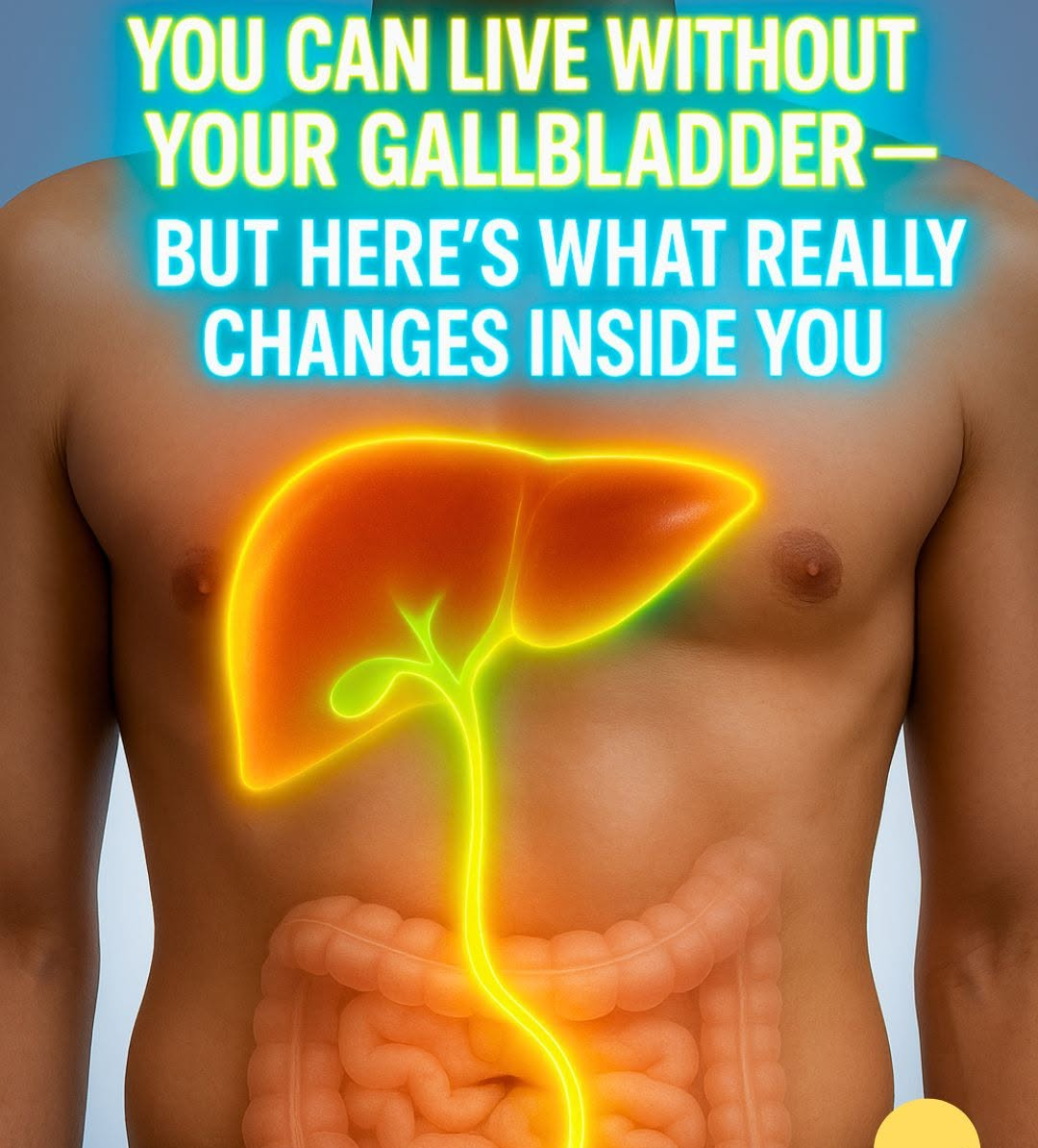
# You Can Live Without Your Gallbladder — But Here’s What Really Changes Inside You
Yes, you can live a normal life without a gallbladder. In fact, gallbladder removal, known medically as **cholecystectomy**, is a common operation performed when gallstones or inflammation cause repeated problems.
But removing the gallbladder does change the way bile moves through your digestive system. Most people adjust well, while some notice temporary—or occasionally persistent—changes in digestion.
Here is what actually happens inside your body after the gallbladder is removed.
## What Does the Gallbladder Normally Do?
The gallbladder is a small, pear-shaped organ located beneath the liver.
Its main job is to **store and concentrate bile**, a digestive fluid produced continuously by the liver. Bile helps your body digest and absorb dietary fats.
When you eat—especially a meal containing fat—the gallbladder contracts and releases stored bile into the small intestine.
The important point is that the gallbladder **does not make bile**.
Your liver does.
That explains why the body can continue digesting food after the gallbladder is removed.
## What Changes After Gallbladder Removal?
Before surgery, bile is stored in the gallbladder until it is needed.
After surgery, there is no storage reservoir. Instead, bile produced by the liver flows directly through the bile ducts and into the small intestine.
In simple terms:
**Before surgery:**
Liver → gallbladder stores bile → bile released during meals
**After surgery:**
Liver → bile ducts → small intestine
Your liver continues producing bile normally.
For most people, this new arrangement works well enough that they can eventually digest food normally.
## 1. Bile Flows More Continuously
The biggest internal change is how bile reaches your intestines.
Without the gallbladder, bile is no longer released in a concentrated burst when you eat. Instead, smaller amounts enter the intestine more continuously.
This usually causes no major problems.
However, some people notice that large or very fatty meals are harder to tolerate, particularly during the first weeks after surgery.
## 2. Your Digestion Usually Adapts
Many people worry that they will never be able to digest fat normally again.
That is generally not the case.
Because the liver continues making bile, your digestive system can still process dietary fat. NHS guidance notes that people can digest food normally after gallbladder removal.
During recovery, however, the digestive system may need time to adjust.
Some people temporarily experience:
* Bloating
* Indigestion
* Gas
* Abdominal discomfort
* Loose stools
* More frequent bowel movements
These symptoms often improve as the body adapts.
## 3. Some People Develop Diarrhea
One of the better-known changes after gallbladder surgery is looser or more frequent stools.
The National Institute of Diabetes and Digestive and Kidney Diseases explains that a small number of people develop softer and more frequent bowel movements after gallbladder removal because bile reaches the intestine more often. These changes are usually temporary.
One possible explanation is that greater amounts of bile acids may reach the colon, where they can stimulate bowel movements.
In most cases, diarrhea improves within weeks or months. Occasionally, it lasts longer.
## 4. Fatty Meals May Cause More Symptoms at First
A huge greasy meal requires a larger amount of bile to help digest the fat.
Before surgery, the gallbladder could store concentrated bile and release it when needed. Without the gallbladder, that concentrated reserve is no longer available.
This is why some people feel better initially when they eat smaller meals and avoid very high-fat foods.
Examples that may trigger symptoms during recovery include:
* Deep-fried foods
* Very greasy meals
* Heavy cream sauces
* Large portions of fatty meat
* Large amounts of butter or oil
This does not necessarily mean these foods must be avoided forever.
Mayo Clinic notes that there is no special lifelong gallbladder-removal diet required for most people.
## 5. You Usually Do Not Need a Special Diet Forever
One of the biggest myths about gallbladder removal is that a person must follow an extremely restrictive diet for life.
Most people do not.
After the initial recovery period, foods can generally be reintroduced gradually according to individual tolerance.
A balanced eating pattern can include:
* Vegetables
* Fruit
* Whole grains
* Lean protein
* Fish
* Poultry
* Beans and lentils
* Moderate amounts of healthy fats
Eating smaller portions may be easier initially than eating one very large meal.
## 6. Your Liver Does Not Take Over the Gallbladder’s Job
This is another common misconception.
The liver was already making bile before surgery. It does not suddenly begin performing an entirely new function after the gallbladder is removed.
What changes is simply where bile goes.
Instead of being temporarily stored in the gallbladder, it passes directly from the liver into the intestines.
## 7. You Can Still Absorb Nutrients
Most people continue absorbing nutrients normally after gallbladder removal.
The operation does not normally prevent the digestive system from absorbing vitamins, minerals, protein, or carbohydrates.
Because bile helps digest fat, people experiencing persistent severe diarrhea or difficulty tolerating food should discuss their symptoms with a healthcare professional rather than assuming they are simply a normal consequence of surgery.
## What Should You Eat Immediately After Surgery?
Individual surgical instructions always come first, but many people find it easier to start with smaller, lighter meals.
Foods that may be easier to tolerate include:
* Rice
* Oatmeal
* Potatoes
* Toast
* Bananas
* Cooked vegetables
* Soup
* Lean chicken or fish
* Low-fat yogurt if tolerated
Gradually increase the variety of foods as digestion settles.
There is usually no benefit in following an unnecessarily restrictive diet if foods are being tolerated well.
## What If Diarrhea Continues?
Occasional loose stools shortly after surgery are relatively common.
Persistent diarrhea deserves more attention.
Mayo Clinic recommends seeking medical advice when diarrhea after gallbladder removal is persistent or severe, particularly when accompanied by concerning symptoms.
A clinician can determine whether excess bile acids or another digestive condition may be responsible and whether treatment is appropriate.
## When Should You Contact a Doctor After Gallbladder Removal?
Some discomfort is expected during recovery, but ongoing or worsening symptoms should be evaluated.
Contact your healthcare team if you experience persistent:
* Abdominal pain
* Nausea or vomiting
* Indigestion
* Diarrhea
* Digestive symptoms that are not improving
The NHS notes that these symptoms can occur after gallbladder removal but should be assessed if they continue.
Seek urgent medical attention for severe or rapidly worsening symptoms, especially significant abdominal pain, fever, jaundice, or repeated vomiting.
## Does Gallbladder Removal Shorten Your Life?
For most people, removing the gallbladder does not prevent a normal life.
The gallbladder is useful, but it is not essential for survival because bile continues to be produced by the liver and delivered to the digestive tract.
Once recovery is complete, many people return to their normal activities and usual diet.
## Why Is the Gallbladder Removed in the First Place?
Gallbladder surgery is commonly recommended when gallstones repeatedly cause symptoms or complications.
Gallstones can block bile ducts and lead to pain, inflammation, jaundice, or pancreatitis.
In these situations, removing the gallbladder can prevent repeated attacks and potentially serious complications.
## The Bottom Line
You absolutely **can live without your gallbladder**.
Your liver continues making bile, but instead of being stored and concentrated in the gallbladder, bile flows directly into the small intestine.
Most people eventually digest food normally. Some experience temporary diarrhea, bloating, indigestion, or difficulty with very fatty meals while their digestive system adjusts. A smaller number may have longer-lasting symptoms that deserve medical evaluation.
So the biggest change is not that your body stops producing something essential.
It is that **bile changes from being stored and released on demand to flowing more continuously into your digestive tract**—and for most people, the body adapts remarkably well.