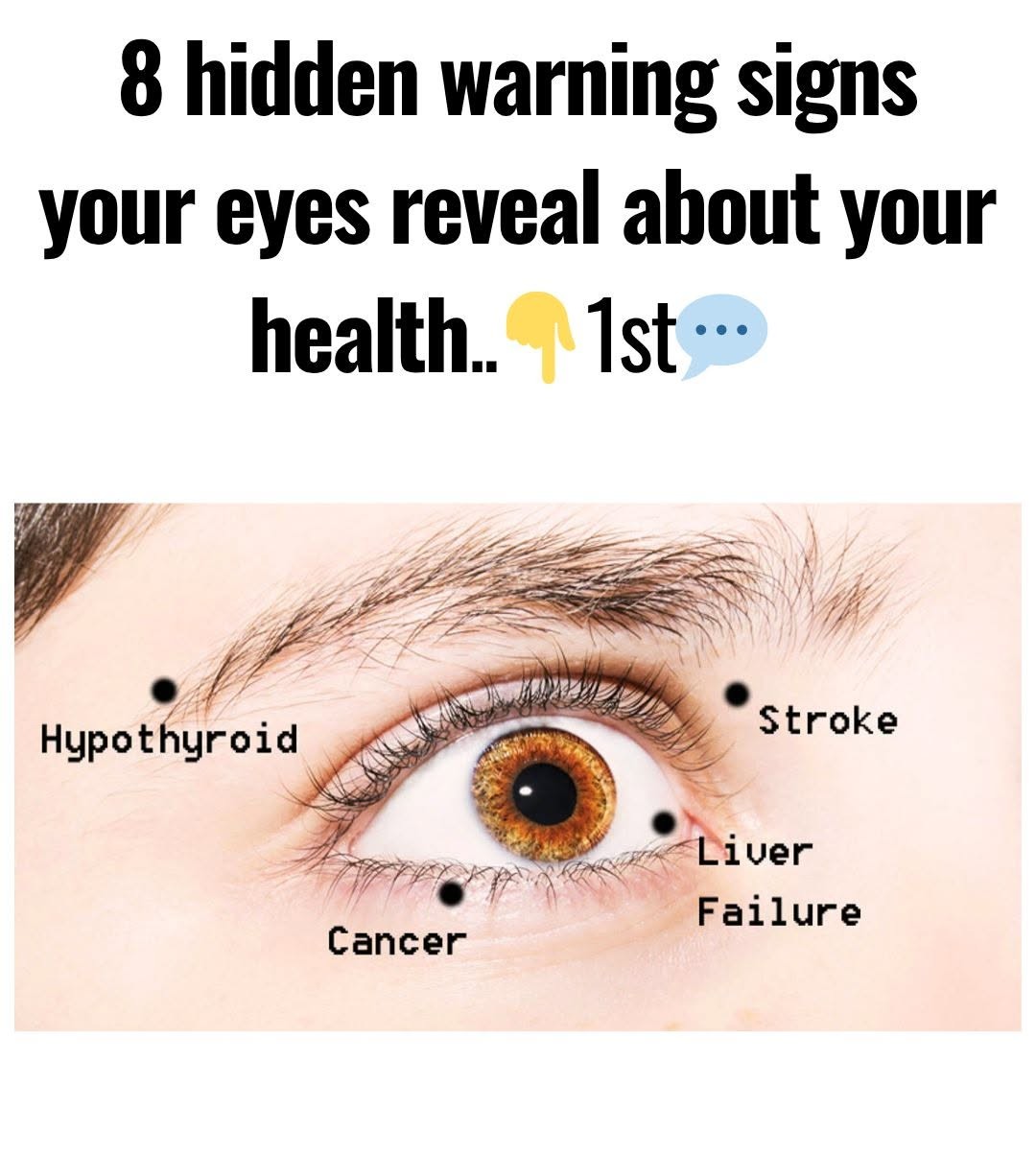
Your eyes can sometimes reveal more than problems with vision. Changes in the whites of the eyes, eyelids, pupils, or the way you see may occasionally point to issues elsewhere in the body.
1. Yellowing of the Whites of the Eyes
If the normally white part of the eye becomes yellow, this can be a sign of jaundice.
Jaundice happens when bilirubin builds up in the blood. Possible causes include problems involving the liver, gallbladder, bile ducts, or red blood cells.
Yellow eyes should not be ignored, particularly when they appear together with:
Dark urine
Pale stools
Abdominal pain
Nausea
Itching
Unusual tiredness
A healthcare professional can determine the cause with examination and appropriate tests.
2. Persistent Red Eyes
Red eyes are extremely common and often result from harmless causes such as dryness, allergies, irritation, or lack of sleep.
However, persistent redness can sometimes be linked to:
Conjunctivitis
Dry-eye disease
Inflammation inside the eye
Injury
Contact-lens complications
Redness becomes more concerning if it is accompanied by severe pain, sensitivity to light, discharge, headache, or reduced vision.
3. Blurred or Changing Vision
Vision that becomes blurry can have many explanations, including an outdated glasses prescription, eye strain, dry eyes, cataracts, or changes in blood sugar.
Blurred vision should be checked if it is persistent, recurring, or worsening.
Sudden vision loss or a sudden major change in vision is an emergency and requires urgent medical attention.
4. A Gray or White Ring Around the Cornea
Some people develop a pale gray, blue, or white ring around the outer edge of the cornea. This is known as corneal arcus.
It is common in older adults and may simply be an age-related change.
When it develops in a younger person, however, a clinician may consider checking cholesterol and other blood lipids because early corneal arcus can sometimes be associated with elevated cholesterol.
The ring itself usually does not interfere with vision.
5. Puffy or Swollen Eyelids
Puffy eyes are often caused by something simple, including:
Allergies
Crying
High salt intake
Fluid retention
But persistent swelling around the eyes can occasionally be associated with thyroid disease, kidney problems, inflammation, or other medical conditions.
If swelling is severe, affects only one side, appears with breathing difficulty, or persists without an obvious explanation, it deserves medical evaluation.
6. Dry, Gritty, or Burning Eyes
Occasional dry eyes are common, especially after long periods of screen use or in dry environments.
Reduced tear production
Contact lenses
Certain medications
Hormonal changes
Eyelid problems
Autoimmune conditions
People with ongoing dry-eye symptoms may describe burning, stinging, a gritty sensation, excessive watering, or fluctuating vision.
7. Drooping Eyelids
A drooping upper eyelid, known as ptosis, can develop gradually with aging and may be harmless.
Any sudden change is more important than a long-standing, stable droop.
8. Flashes, Floaters, or a “Curtain” in Your Vision
Small floaters—tiny dots, lines, or cobweb-like shapes moving across your vision—are common, particularly with age.
But a sudden increase in floaters, flashing lights, or the sensation of a dark curtain or shadow moving across part of your vision can be a warning sign of a retinal tear or retinal detachment.
This is an eye emergency because rapid treatment may be necessary to protect vision.
Seek urgent eye care if you suddenly develop:
Many new floaters
Repeated flashes of light
A dark shadow in your visual field
A curtain-like loss of vision
Eye Changes Can Be Clues, Not Diagnoses
However, appearance alone is rarely enough to diagnose any of these conditions.
A red eye does not automatically mean infection. Puffy eyelids do not prove kidney disease. Blurry vision does not automatically mean diabetes.
The important questions are whether the symptom is new, persistent, worsening, painful, or associated with vision loss or other symptoms.
Some eye symptoms should be treated as urgent.
Sudden loss of vision
Severe eye pain
Sudden double vision
A curtain or shadow over vision
Sudden flashes with many new floaters
Eye injury
Sudden drooping of an eyelid with neurological symptoms
Severe redness accompanied by pain or vision changes
The Bottom Line
Your eyes can sometimes provide early clues that something in your body needs attention. Yellowing, persistent redness, changing vision, unusual rings around the cornea, chronic swelling, severe dryness, eyelid changes, or sudden flashes and floaters are all worth understanding.
The best approach is simple: pay attention to new changes, avoid self-diagnosing from appearance alone, and seek professional care when symptoms persist or vision changes suddenly.