
It all began quietly, almost imperceptibly, in the everyday rhythms of Minneapolis. Nick Shirley, an ordinary citizen, lived a life that was, in many ways, unremarkable. He woke up at dawn, worked long hours, and came home to his family at night. He wasn’t a journalist, an investigator, or even someone with any particular interest in the political undercurrents that swirled around him. Yet, in one fateful moment, he would find himself thrust into a battle for truth that would forever change his life—and the lives of those around him.
The beginning was simple enough: a series of security camera footage from a local business. It seemed mundane, just another set of clips captured by a camera that had no real purpose other than to monitor the business’s activity. But in one of those fleeting moments, Nick saw something he couldn’t ignore. A well-known public figure, someone who commanded respect and power, entered a local center. But it was what happened next that raised alarms: the figure came out, carrying nothing in hand when they entered, but with a satchel large enough to hold something of substantial value. Nick’s mind began to race.
Was it just a coincidence? Maybe the figure was merely picking up something, or perhaps it was all just a misunderstanding. But something about the image didn’t sit right with him. The satchel, the lack of context—it all felt wrong, too significant to dismiss as an accident. And so, like so many before him, Nick found himself at the crossroads of moral duty and personal fear. What could he do with this information? Could he expose something this large? And what would it mean for his life if he did?
At first, the doubts gnawed at him. He wasn’t a detective or a reporter; he had no experience in exposing corruption or wrongdoing. He was just an average man with no resources to back him up. But still, the nagging feeling remained. The footage didn’t lie, and neither did the unease that continued to grow within him. Nick began to research, watching the footage over and over again. What did it mean? What was the person carrying? Why was no one talking about it?

The days passed, and the obsession began to consume him. Nick couldn’t shake the feeling that he had uncovered something larger than he could comprehend. Was he paranoid? Was it all in his head? Or had he stumbled onto something significant? The more he delved into it, the more he realized that there was no turning back. Whatever this was, it demanded to be understood.
Late one night, as Nick sat alone at his desk, the decision to act felt inevitable. His fingers hovered over the keyboard as he typed out a blog post detailing what he had discovered. He wasn’t sure what he was hoping for—maybe he thought that sharing the information would bring clarity, or maybe he just needed to be heard. But when the words were finally out in the world, he was overwhelmed by a mix of fear and relief. He had crossed a line, and there was no way back.
The response was swift and harsh. Nick had expected some pushback, but nothing could have prepared him for the onslaught that followed. His post went viral, but not in the way he had imagined. It was a whirlwind of ridicule and skepticism. Critics accused him of being sensationalist, of reading too much into the footage. Some even questioned his motives, suggesting that he was seeking attention or fame. Was he a hero, or was he just a man who had gotten caught up in something bigger than himself?
The most difficult part was the silence from those closest to him. His friends and family, who had once supported him, now looked at him with doubt. No one understood. How could they? How could they comprehend the significance of the footage when Nick himself wasn’t entirely sure what it meant? But the truth was there, staring him in the face, and Nick couldn’t just turn away.
His journey had only just begun, and it was proving to be more difficult than he had ever imagined. Every time he thought he had found a breakthrough, another obstacle emerged. The authorities were unresponsive, dismissing his concerns as trivial or unfounded. When he reached out to state officials, he was met with a lack of interest, and the frustration mounted. Nick couldn’t help but feel like he was fighting an uphill battle, one that seemed impossible to win.

But there was a small glimmer of hope—a breakthrough. After several attempts, Nick was finally given a direct email to someone at a higher level, Director Patel’s office. It felt like a small victory, a sign that his efforts weren’t in vain. Yet, even then, the responses were slow, and the silence stretched on. The more time passed, the more isolated Nick felt.
Nick had always played by the rules. He had spent his life working hard, following the path set before him. But now, he was stepping into a world that was foreign to him. This wasn’t about following the rules. This was about challenging them, about uncovering something that had been hidden for far too long. It was a burden, and it weighed heavily on him.
As Nick continued his investigation, the emotional toll was undeniable. Every day felt like a new test of his resolve. Was he doing the right thing? Was he wrong to question those in power? The uncertainty was all-consuming, but he couldn’t stop. The truth was more important than his fears, and it was a truth he couldn’t ignore.
Then, one day, everything changed. The narrative Nick had started to build was no longer just his alone. Others began to come forward with similar findings—footage that corroborated his own, showing the same public figure in questionable situations. It wasn’t just Nick anymore; it was a movement, a collective realization that the truth was larger than they had thought. What had started as a single, solitary effort had become a powerful force of accountability. And yet, as the evidence piled up, so did the risks.
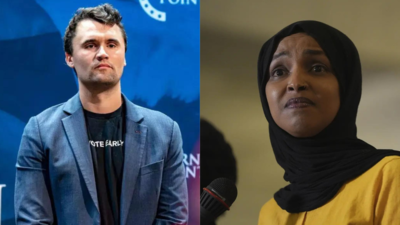
Nick found himself facing a difficult question: What would life look like when the truth came to light? If he succeeded in exposing what he had found, what would his world be like afterward? The journey had changed him, and there was no going back to the way things were before. The emotional toll had reshaped him, and now the world was watching, waiting for what would come next.
As the investigation continued, Nick came to realize that his story was no longer just about exposing corruption. It was about the emotional journey he had undergone—about how seeking the truth had forced him to confront his own fears, doubts, and limitations. It was about the toll it took on his personal life, his relationships, and his sense of identity.
The truth, he had learned, was never simple. It wasn’t just a matter of gathering evidence and exposing wrongdoings. It was about the emotional cost of seeking that truth. It was about the sacrifices, the isolation, and the constant questioning of whether it was all worth it.
But Nick had no choice. The truth mattered too much. It always had. And in the end, it wasn’t about what happened next—it was about the journey he had taken, the courage it had taken to go against the grain, and the realization that sometimes, the smallest voice can create the loudest impact.
Nick’s story serves as a reminder of what happens when we choose to act, even when the consequences are unknown. It’s a story of courage, of standing up in the face of uncertainty, and of doing what is right, no matter the personal cost. As Nick reflects on everything he has learned, he knows that the truth is never simple, but it is always worth fighting for.
In a world where the line between fact and fiction is increasingly blurred, Nick’s journey is a beacon of hope for those who believe that the truth, no matter how painful, is worth uncovering. His story is not just about uncovering corruption; it’s about the resilience of the human spirit and the power of one individual’s voice to shake the very foundations of power.