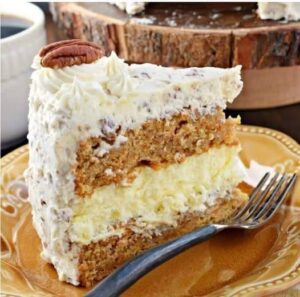
A classic, bakery-style carrot cake just like Grandma used to make — moist, warmly spiced, and topped with silky cream cheese frosting.
There are certain desserts that don’t just satisfy a sweet tooth — they bring back memories you didn’t even realize you missed. Carrot cake is one of those rare recipes. It’s not flashy. It doesn’t need sprinkles or chocolate drips or fancy decorations. It simply shows up, quietly confident, knowing that one bite will do all the talking.
For many of us, carrot cake was the cake that appeared when company came over. It showed up at Easter dinners, church potlucks, baby showers, and birthdays where the guest list leaned more toward grown-ups than children. It was the cake your grandmother trusted — dependable, generous, and always welcome.
This is that cake.
The kind made with freshly grated carrots, warm cinnamon, and a neutral oil that keeps the crumb tender for days. The kind topped with a thick layer of cream cheese frosting — not whipped or airy, but smooth and rich, with just enough tang to balance the sweetness. The kind of cake that tastes even better the next day, once all the flavors have had time to settle in together.
This recipe doesn’t chase trends. It honors tradition. And once you bake it, you’ll understand why carrot cake has stood the test of time.
Why This Old-Fashioned Carrot Cake Works Every Time
There’s a reason vintage carrot cake recipes rarely fail. They were developed long before shortcuts, boxed mixes, or gimmicks. Every ingredient had a purpose.
Fresh carrots provide moisture and subtle sweetness. Oil — not butter — keeps the crumb soft even when chilled. Eggs give structure without drying the cake out. Cinnamon adds warmth without overpowering. Toasted nuts bring texture and depth.
And the frosting? Cream cheese frosting is non-negotiable. It’s the finishing touch that turns a humble spice cake into something special.
This recipe stays true to those roots while refining the method just enough to guarantee consistent results, whether you’re baking it for the first time or the fiftieth.
Ingredients You’ll Need
For the Carrot Cake
2 cups (260 g) all-purpose flour
1 teaspoon baking soda
1½ teaspoons baking powder
½ teaspoon salt
1½ teaspoons ground cinnamon
4 large eggs, room temperature
1½ cups (300 g) granulated sugar
1 cup (240 ml) vegetable, canola, or safflower oil
2 teaspoons pure vanilla extract
¾ pound (340 g) raw carrots, finely grated (about 2½ cups)
1 cup (100 g) pecans or walnuts, toasted and chopped
For the Cream Cheese Frosting
8 oz (227 g) cream cheese, room temperature
¼ cup (57 g) unsalted butter, room temperature
2 cups (230 g) powdered sugar, sifted
1 teaspoon vanilla extract
1 teaspoon finely grated lemon zest (optional)
Before You Begin
Preheat your oven to 350°F (180°C) and place the rack in the center.
Prepare two 9-inch round cake pans with 2-inch sides. Butter or spray them generously, then line the bottoms with parchment paper or wax paper. This small step is what ensures your cake layers release cleanly every time — no sticking, no cracking, no heartbreak.
Step-by-Step: How to Make the Best Carrot Cake
1. Toast the Nuts
Spread the pecans or walnuts on a baking sheet and toast for about 8 minutes, just until fragrant and lightly golden. Let them cool completely before chopping.
This step might seem optional, but it’s not. Toasting intensifies flavor and keeps the nuts crunchy inside the cake instead of soft.
2. Prepare the Carrots
Peel the carrots and grate them finely. Avoid pre-shredded carrots — they’re too dry and won’t melt into the batter the way fresh ones do.
Freshly grated carrots are the secret to that unmistakable moist texture carrot cake is known for.
3. Mix the Dry Ingredients
In a medium bowl, whisk together the flour, baking soda, baking powder, salt, and cinnamon. Set aside.
This even distribution ensures the cake rises evenly and the spices don’t clump.
4. Beat the Eggs and Sugar
In a large mixing bowl, beat the eggs until frothy, about one minute. Gradually add the sugar and continue beating for 3–4 minutes, until the mixture is thick, pale, and slightly glossy.
This step creates structure and helps dissolve the sugar properly, giving the cake a smooth crumb.
5. Add the Oil and Vanilla
With the mixer running, slowly drizzle in the oil. Don’t rush this step. Adding the oil gradually allows it to emulsify with the eggs, creating a batter that’s silky and cohesive.
Beat in the vanilla extract.
6. Combine Wet and Dry Ingredients
Add the flour mixture and mix just until incorporated. Overmixing at this stage can make the cake dense, so stop as soon as the flour disappears.
7. Fold in the Carrots and Nuts
Using a rubber spatula, gently fold in the grated carrots and chopped nuts. The batter will be thick — that’s exactly how it should be.
8. Bake
Divide the batter evenly between the prepared pans. Smooth the tops lightly.
Bake for 25–30 minutes, or until a toothpick inserted in the center comes out clean.
9. Cool Completely
Let the cakes cool in their pans for 5–10 minutes. Then invert them onto a wire rack, remove the parchment paper, and let them cool completely before frosting.
Patience here pays off. Frosting a warm cake is a recipe for melted disappointment.