
In the history of slavery, some stories are remembered because of battles, revolutions, or famous leaders who changed the course of nations. Others survive because they reveal something much darker: the terrifying ways human beings can be reduced to property when a society accepts cruelty as normal.
The story of Roque José Florêncio, a man who became known by the nickname “Pata Seca,” belongs to that painful chapter of history.
Born in the Brazilian province of São Paulo during the 19th century, Roque was remembered as an extraordinarily tall and physically imposing man. Historical accounts describe him as standing around 2.18 meters tall — more than seven feet — a height that would have made him remarkable anywhere in the world.
Instead of being admired for his strength, intelligence, personality, or dreams, Roque was viewed through the cruel lens of a system that treated enslaved people as investments. His body became the only thing many people saw.
To slave owners, these were not simply human traits. They were considered economic assets.
And that was the tragedy.
The story of Roque José Florêncio is not truly about how tall he was.
It is about how a society could look at a human being and see only what it could take from him.
Brazil’s Slave Empire and the Human Cost Behind Its Wealth
During the 1800s, Brazil was one of the largest slave societies in the world.
For more than three centuries, millions of Africans and their descendants were forced into slavery across the country. They worked on plantations producing sugar, coffee, cotton, and other valuable goods that enriched landowners and helped build Brazil’s economy.
By the middle of the 19th century, coffee had become one of Brazil’s most important exports. The coffee plantations of São Paulo expanded rapidly, creating enormous wealth for plantation owners.
The coffee empire depended on enslaved labor.
Thousands of enslaved men and women worked under harsh conditions, performing exhausting agricultural labor from sunrise to sunset. Families were separated through sales. Children could be taken away from parents. Individuals were denied control over their own lives.
The law treated enslaved people as property rather than citizens.
This meant that slave owners could buy, sell, transfer, and exploit human beings for financial gain.
Within this environment, even the human body became something that could be evaluated, judged, and traded.
A person’s age, physical appearance, strength, and health could determine their price.
And within such a system, extraordinary physical characteristics could become a curse rather than a blessing.
The Birth of a Man Who Would Become Known as “Pata Seca”
Roque José Florêncio was believed to have been born around 1827 in the region of São Paulo.
Little is known about his early childhood, as the lives of enslaved people were often poorly recorded. Many left behind only fragments of information because the society that enslaved them rarely cared to preserve their voices.
What is remembered is that Roque grew into an unusually tall man.
Stories describe him as already towering above others during his teenage years. As he reached adulthood, his height became impossible to ignore.
In another time and another place, such a person might have become famous as an athlete, performer, soldier, or community leader.
But Roque was born into a world where enslaved people had almost no control over how their talents or appearances were used.
His physical difference attracted attention.
And attention, under slavery, could be dangerous.
Many accounts surrounding Roque connect his nickname “Pata Seca,” meaning “dry paw” or “dry foot,” to the appearance of his legs. The exact origins of the nickname remain debated, but stories surrounding him claim that his unusual proportions became part of the way others viewed him.
Instead of seeing a person, people saw a body.
Instead of seeing a man with thoughts and feelings, they saw a biological curiosity.
That was the cruelty of slavery: it did not simply control a person’s labor.
It attempted to control their entire existence.
The Dark Beliefs That Turned Human Beings Into Property
One of the most disturbing aspects of slavery was the way enslaved people were often subjected to false beliefs created to justify exploitation.
Slave societies frequently developed ideas that attempted to categorize human beings according to physical characteristics.
These beliefs were not based on science.
They were based on greed.
In Brazil, as in other slave societies, enslaved people were often valued according to how owners believed they could increase wealth. Some were considered valuable because of their strength. Others because of their skills. Others because of their ability to produce more enslaved laborers under the horrific logic of the system.
This was not admiration.
It was exploitation.
The human body became part of an economic calculation.
Stories about Roque José Florêncio describe him as being valued by slave owners not because of who he was, but because of what they believed his physical characteristics represented.
Whether every detail of those accounts can be proven today, the larger historical truth remains undeniable:
Enslaved people were frequently denied their humanity and treated as tools for economic production.
The horror was not only physical.
It was psychological.
Imagine living in a world where strangers evaluated your body, your future, and your worth without ever asking what you wanted from life.
That was the reality faced by millions.

The Plantation World Where Roque Lived
Roque’s life unfolded during a period when coffee plantations were expanding throughout southeastern Brazil.
The plantation system created enormous fortunes for a small group of landowners.
Large estates controlled thousands of acres of farmland. Wealthy families built impressive homes, imported luxury goods, and gained political influence.
But the people who made that wealth possible lived in completely different conditions.
Enslaved workers lived under constant control.
Their movements were restricted.
Their families could be separated.
Their futures were determined by owners.
For someone like Roque, whose size made him stand out, anonymity was impossible.
Everywhere he went, people noticed him.
But being noticed did not mean being respected.
In a free society, being different can be a source of pride.
Under slavery, being different could make a person more vulnerable.
The very qualities that made Roque extraordinary were used against him.
A Life Defined by Survival
The most important part of Roque José Florêncio’s story is not the myths surrounding him.
It is the simple fact that he survived.
Survival under slavery required enormous strength.
Not only physical strength, but emotional strength.
Enslaved people developed ways to preserve their identities despite a system designed to erase them. They created families, communities, traditions, music, faith practices, and forms of resistance.
They found ways to remain human in a world that constantly told them they were property.
Roque’s life must be understood within that larger history.
Behind the stories of his height and unusual appearance was a person who experienced fear, uncertainty, and loss.
He was not a symbol.
He was not a legend.
He was a man.
A man who lived during one of the darkest periods of Brazilian history.
The Children and Descendants Left Behind
Many stories about Roque José Florêncio focus on claims that he fathered a very large number of children.
Some accounts say he had more than 200 descendants.
While exact numbers are difficult to verify, what is clear is that many descendants today connect their family histories to him.
For them, Roque is not simply a historical figure.
He is an ancestor.
A reminder that even people who suffered under slavery continued to create families, communities, and futures.
This is one of the most powerful lessons from the history of slavery.
Slave systems attempted to reduce people to property.
But enslaved people resisted that reduction every day.
They loved.
They protected their children.
They passed down stories.
They built lives.
Their humanity survived despite everything designed to destroy it.
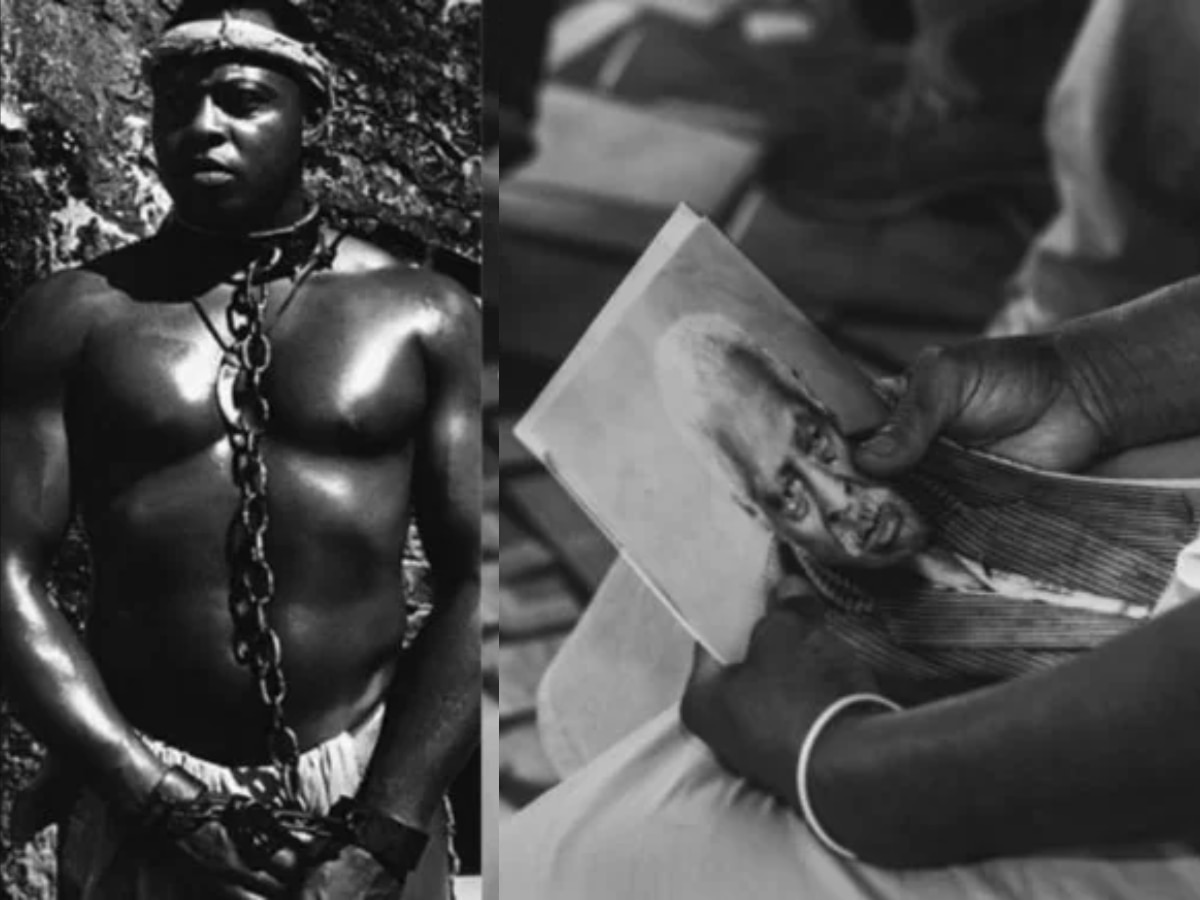
The End of Slavery and the Beginning of a New Struggle
Brazil was the last country in the Western Hemisphere to abolish slavery.
On May 13, 1888, Princess Isabel signed the Lei Áurea, officially ending slavery in Brazil.
For millions of formerly enslaved people, emancipation represented freedom.
But freedom did not immediately bring equality.
Many former slaves had no land, no financial support, and no opportunities. They entered a society still shaped by centuries of racial inequality.
The end of slavery removed legal ownership of human beings, but it did not erase the damage created by generations of oppression.
Families continued struggling against poverty and discrimination.
Communities fought to preserve their history and culture.
Stories like Roque’s became important because they showed that enslaved people were not simply victims of history.
They were survivors who carried incredible strength.
Remembering Roque José Florêncio Beyond the Myth
Over time, stories about Roque José Florêncio became surrounded by dramatic descriptions and legends.
Some focused on his enormous size.
Others focused on the circumstances of his life under slavery.
But the most meaningful way to remember him is not as a curiosity.
It is as a person.
History often remembers powerful individuals: kings, presidents, generals, and famous artists.
But ordinary people who endured extraordinary suffering are equally important.
Roque represents millions whose names were never written in history books.
People who worked.
People who suffered.
People who loved their families.
People who dreamed of freedom.
His story forces us to confront an uncomfortable truth:
The greatest tragedy of slavery was not only the physical suffering it caused.
It was the attempt to convince the world that some human beings were worth less than others.
The Legacy of a Man Who Could Not Be Erased
Today, stories about Roque José Florêncio continue to inspire discussions about slavery, memory, and human dignity.
His life reminds us that history is not only found in monuments and official records.
Sometimes history survives through family memories.
Through descendants.
Through stories passed from one generation to another.
Roque was born into a system that tried to define him by ownership.
But more than a century later, people remember his name.
Not because he was a giant.
Not because of rumors about his body.
But because he was a human being who lived through an era when humanity itself was denied to millions.
The story of Roque José Florêncio is ultimately a story about survival.
A story about the strength of people who endured unimaginable circumstances.
A story about why remembering the past matters.
Because when we remember people like Roque, we do more than look back at history.
We recognize the value of every human life.