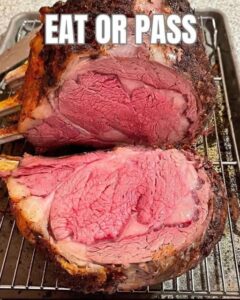
If you’re looking for a show-stopping centerpiece that screams comfort and indulgence, this prime rib roast is it. With a deeply seasoned crust and a tender, rosy center, this roast is everything a special meal should be—rich, juicy, and unforgettable.
This recipe focuses on simplicity and technique, letting the quality of the beef shine while ensuring consistent, restaurant-quality results at home.
Why This Prime Rib Recipe Works
Low and slow roasting keeps the meat evenly cooked
High-heat finish creates a flavorful crust
Simple seasoning enhances the natural beef flavor
Resting time locks in juices for a perfect slice
Ingredients
1 prime rib roast (4–6 lbs, bone-in or boneless)
2 tbsp kosher salt
1 tbsp freshly ground black pepper
1 tbsp garlic powder (or 4 cloves fresh garlic, minced)
1 tbsp fresh rosemary, finely chopped
1 tbsp fresh thyme, finely chopped
2 tbsp olive oil or softened butter
Instructions
1. Bring to Room Temperature
Remove the prime rib from the refrigerator 2–3 hours before cooking. This ensures even roasting from edge to center.
2. Season Generously
Pat the roast dry with paper towels. Rub all sides with olive oil or butter, then coat evenly with salt, pepper, garlic, rosemary, and thyme.
3. Slow Roast
Preheat oven to 250°F (120°C)
Place the roast on a rack set inside a roasting pan, fat side up
Roast until internal temperature reaches:
120°F (49°C) for medium-rare
125°F (52°C) for medium
This usually takes 2½–3½ hours, depending on size.
4. High-Heat Finish
Remove the roast and tent loosely with foil.
Increase oven temperature to 500°F (260°C).
Once hot, return the roast to the oven for 8–10 minutes until a dark, crispy crust forms.
5. Rest Before Slicing
Let the prime rib rest for 20–30 minutes. This step is crucial for juicy, clean slices.
How to Slice Prime Rib
Use a long, sharp carving knife
Slice against the grain
Cut thick slices for a hearty meal or thin slices for elegant plating
Serving Suggestions
Creamy horseradish sauce
Garlic mashed potatoes
Roasted vegetables or asparagus
Au jus made from pan drippings
Pro Tips for the Best Prime Rib
Always use a meat thermometer—don’t rely on time alone
Bone-in roasts are more flavorful, but boneless are easier to carve
The roast will continue cooking while resting (carryover heat)
Final Thoughts
This prime rib roast is tender, deeply flavorful, and cooked to perfection with a warm pink center—exactly how prime rib should be. Whether it’s for a holiday, celebration, or just because, this recipe guarantees a meal your guests will talk about long after the last slice is gone.
Eat or pass? This one’s definitely eat. 🥩🔥