
The Spark That Ignited Tension
The night began as most celebrity interactions do: anticipation, rehearsed lines, and the expectation of controlled discourse. George Clooney, a figure renowned for charm and calculated commentary, stepped into a public debate intending to challenge Nancy Grace on patriotism, cultural values, and the trajectory of American society. Clooney assumed the advantage of celebrity status, expecting to score points through his popularity and public trust.
Nancy Grace, however, was no ordinary opponent. Known for her sharp mind, rigorous pursuit of truth, and commanding presence, she had spent decades analyzing debate, media, and public behavior. Clooney’s assumption that a pointed jab would silence her miscalculated the depth of her experience. Grace’s response was immediate, firm, and precise—a demonstration that influence cannot be wielded without accountability. Her voice cut through the spectacle with authority, immediately reframing the confrontation from a celebrity quarrel into a serious ethical discussion.
The studio, the cameras, and millions of viewers around the nation sensed the shift. This was no longer about a clash of personalities; it was a moment charged with stakes about freedom of thought, public discourse, and the responsibility of influence. As Grace began, she anchored her critique in principle, emphasizing that the true division in society stems not from dissent, but from contempt for those who disagree.
Grace’s initial statement set the tone: she would not be intimidated by celebrity status. She reframed the narrative, insisting that respect, honesty, and open dialogue matter more than personal fame or political popularity. In doing so, she transformed a potentially fleeting feud into a powerful lesson in civic responsibility and the ethics of communication.
The Weight of Words
“George Clooney says I’m dividing people with my opinions,” Nancy Grace began, her voice calm but resolute. “But what truly divides this country is mocking anyone who thinks differently and pretending only one side deserves to be heard.” These words resonated far beyond the studio, cutting across ideological lines, and landing like a moral indictment.
Grace emphasized that influence carries responsibility. Clooney, in attempting to use his fame to critique her, inadvertently highlighted the societal problem she described: the use of celebrity to silence dissent, enforce conformity, and delegitimize alternative perspectives. In this exchange, viewers witnessed more than conflict—they saw the mechanics of power, speech, and authority being tested in real time.
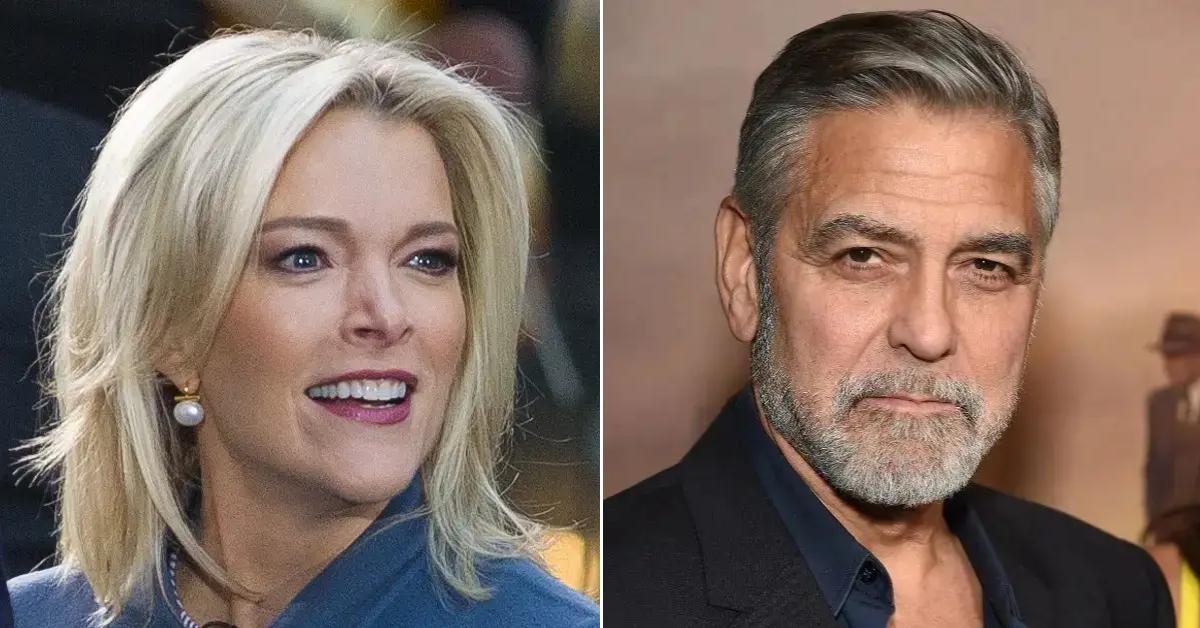
The framing of her argument was deliberate. Grace did not attack Clooney personally; instead, she elevated the discussion to an ethical plane, highlighting principles over personalities. She articulated a larger concern: the erosion of mutual respect in American public discourse and the dangers of prioritizing performance over principle. Her analysis was clear, compelling, and rooted in years of observation of media, culture, and the dynamics of public influence.
By asserting this perspective, Grace shifted the focus of millions of viewers. The narrative was no longer about a celebrity feud; it became a study in the societal importance of ethical communication, critical thinking, and the value of diverse voices. Her words carried the dual force of insight and challenge: they demanded reflection, accountability, and engagement from both the audience and the media ecosystem.
Freedom of Thought in the Crossfire
“You know what’s even more dangerous?” Grace continued, her tone sharpening. “Using fame and influence to shame ordinary people simply because they refuse to follow Hollywood’s political script.” This assertion transformed the debate into a discussion of freedom of thought, illustrating that public discourse must accommodate dissent without descending into ridicule or ostracism.
Grace positioned her argument as a defense of everyday Americans, emphasizing that cultural influence should protect, not punish, the expression of differing perspectives. Her critique highlighted the ethical responsibility that accompanies visibility: those with large platforms cannot casually dismiss, ridicule, or manipulate public sentiment. The audience, both live and at home, immediately grasped the gravity. This was no scripted entertainment—it was an ethical call to action.
By framing dissent as essential to national strength, Grace reinforced a core democratic principle. She argued that fear, intolerance, and manufactured hostility weaken society more than disagreement ever could. In doing so, she positioned herself as a guardian of discourse, insisting that true leadership and influence require respect for intellectual diversity and the lived experiences of ordinary citizens.
Her statements elevated the conversation far beyond celebrity clash, offering a blueprint for responsible public engagement: critique can exist without dehumanization, and influence can inform without dominating. The lesson was subtle yet powerful, illustrating the capacity of words to model civic virtue even in moments of confrontation.

Turning a Feud Into a Lesson
By the time Grace addressed the broader context of the confrontation, the exchange had evolved into a national lesson on dialogue, ethics, and social responsibility. “It’s not different opinions that weaken a nation,” she explained, “what weakens it is fear, intolerance, and teaching people to hate one another because of politics.” The statement reframed the spectacle as a civic teaching moment, emphasizing that public disagreement is not inherently destructive; it is the manner of engagement that defines societal outcomes.
Grace acknowledged her own fallibility, stating, “I’m not perfect. I’ve made mistakes. But I will always believe that a strong country is one where people can speak freely, disagree openly, and still respect each other as fellow Americans.” This honesty enhanced her credibility, demonstrating that principles of respect and freedom require humility, reflection, and consistency, even for those accustomed to authority.
Clooney, intentionally or not, became the counterpoint through which Grace illustrated her argument. By confronting him respectfully but firmly, she demonstrated the power of principle over celebrity, insight over spectacle. The audience witnessed a masterclass in moral clarity, showing that courage can be exercised in public debate not through dominance or provocation, but through articulate, principled, and measured response.
The impact extended beyond the studio. Social media, national news outlets, and everyday viewers engaged with the ethical implications of the moment. The conversation became a mirror reflecting society’s need for measured debate, tolerance of diverse viewpoints, and the importance of empathy in discourse.
The Stage Is Set for Collision
Live television has always been a stage where spontaneity meets calculation, where egos, experience, and audience expectation intersect in ways both exhilarating and dangerous. The moment Blake Shelton, George Clooney, or any prominent figure enters a studio, the energy shifts—not subtly, but with a palpable charge that can be felt in every camera angle, every microphone, and every audience member’s heartbeat.
In the case of Blake Shelton, his arrival brought with it an authenticity that clashed with the prearranged rhythm of the panel. His persona—a combination of country charm, unflinching honesty, and deep connection with working Americans—immediately disrupted the flow. Producers, co-hosts, and crew, accustomed to predictable decorum, sensed the potential for chaos. The audience, too, felt it intuitively. This tension, invisible but tangible, laid the groundwork for a confrontation that would transcend the format of daytime television.
Similarly, George Clooney’s attempt to challenge Nancy Grace leveraged celebrity influence as a weapon. Clooney, aware of his platform and public trust, expected to dominate the narrative effortlessly. Yet he underestimated Grace’s experience, authority, and ability to turn confrontation into a teaching moment. The studio transformed instantly from an entertainment space into a moral and cultural arena, where words carried stakes far beyond ratings or applause.
Every participant—audience, crew, and on-air talent—was engaged in a high-wire act. The balance between humor, critique, and principle was delicate. One misstep, one misjudged inflection, could alter public perception, inflame emotions, or, paradoxically, elevate the confrontation into national discourse. In that room, live, unseen forces of social expectation, ethical responsibility, and human emotion converged, creating a charged environment that only amplified the impact of each word spoken.
Voices That Refuse to Be Silenced
The defining moment, whether it was Blake standing over the table or Nancy Grace responding to Clooney, was characterized by an unwavering commitment to voice. Shelton’s declaration—“You can talk over me—but you’ll never talk me down”—symbolized more than defiance. It was a demand for recognition, respect, and authenticity in spaces dominated by performative civility. Likewise, Grace’s calm but forceful responses articulated that influence must be exercised responsibly, that dissent is vital, and that public debate requires moral clarity.
These moments reveal a paradox: visibility empowers, but it also constrains. Every movement, word, and tone is magnified, dissected, and replayed. Shelton and Grace both understood this, yet chose to prioritize principle over performance. Their courage did not reside in theatrics, but in the deliberate assertion of integrity against expectation, celebrity pressure, and the risk of public backlash.
The audience, both live and millions online, witnessed a rare transparency. The interplay of emotion, intellect, and ethical positioning created a dynamic that extended far beyond entertainment. It offered insight into how public figures navigate responsibility, influence, and authenticity under scrutiny, while also holding a mirror to the society that consumes and interprets their actions.
In these moments, television became more than a platform—it became a forum for civic reflection. The dialogue demonstrated that power, voice, and ethics are inseparable, and that true influence lies not in controlling narratives, but in asserting truth, respect, and moral clarity.

Cultural Tensions Amplified
The clash of personalities is inseparable from the broader cultural context. Blake Shelton’s confrontation tapped into rural-urban divides, perceptions of authenticity, and generational tensions. George Clooney’s critique invoked conversations about Hollywood influence and perceived elitism. Nancy Grace’s responses highlighted the importance of personal responsibility, tolerance, and civic courage. Whoopi Goldberg’s insistence on structure and decorum represented an institutional voice balancing spontaneity with ethical moderation.
Television audiences immediately recognized these layers. The debate was no longer a matter of individual egos—it became a reflection of national conversation, revealing fault lines, values, and the challenges of communication in a polarized society. Social media exploded with commentary, analysis, and memes, showing how one live exchange could catalyze global dialogue about authenticity, respect, and influence.
Every gesture, pause, and inflection contributed to the cultural resonance. Shelton standing, Grace’s measured tone, Goldberg’s corrective interventions—all were signals of values and authority. Audiences instinctively interpreted these nonverbal cues, understanding the stakes in terms both moral and emotional. The live event transformed into a case study of communication, power, and ethics in modern media.