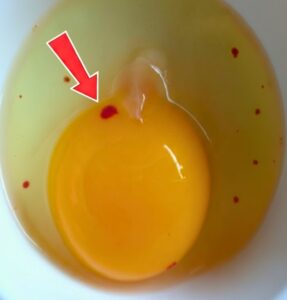
Have you ever cracked an egg only to discover a small red blood spot inside? If so, what did you do with it? Did you throw it away or simply shrug and continue cooking? Many people are unsure whether eggs with these spots are still safe to eat.
In this article, we’ll explain why these spots occur, what they mean, and whether you can still safely consume those eggs.
Are Blood Spots in Eggs Harmful?
The short answer: No, they’re not harmful — as long as the egg is properly cooked.
Eggs with blood spots are completely safe to eat and will not cause illness. If the appearance bothers you, you can simply use the tip of a knife or a spoon to remove the spot before cooking.
You might also notice brown meat spots in the egg white. These are tiny bits of tissue that the egg picks up as it moves through the hen’s oviduct. Like blood spots, they are harmless.
However, if an egg white appears red, pink, or green, discard it immediately. This discoloration could indicate bacterial growth, which can cause foodborne illness.

How Common Are Blood Spots in Eggs?
Blood spots are quite rare. In fact, fewer than 1% of eggs contain them. If you buy eggs from a grocery store, you’re unlikely to ever see one — thanks to a process called candling, where bright light is used to detect and remove imperfect eggs during grading.
For farm-fresh eggs, however, you might come across a blood spot occasionally. Farm eggs don’t undergo industrial grading, and farmers don’t have access to advanced candling equipment. Interestingly, brown eggs tend to have more undetected spots, as their darker shells make the imperfections harder to see.

What Causes Blood Spots in Eggs?
A common misconception is that blood spots mean the egg was fertilized — but that’s false. These spots are actually caused by a ruptured blood vessel in the hen’s ovary or oviduct during egg formation.
If the spot is in the yolk, it means the bleeding occurred in the ovary when the egg was released.
If it’s in the white, the bleeding happened after the egg entered the oviduct.
Either way, the spot is natural and harmless.

Egg Safety: How to Store and Cook Eggs Properly
Even if your egg has no blood spots, proper handling and cooking are essential for safety.
Storage Tips
Store-bought eggs should always be kept in the refrigerator.
Farm-fresh eggs can stay at room temperature, provided the environment is cool, dark, and not humid.
Avoid cracked eggs, as cracks allow bacteria to enter.
Cooked eggs can be safely refrigerated for up to one week.
Cooking Tips
Always wash your hands before and after handling raw eggs.
Cook until both the yolk and white are firm.
Avoid consuming raw or undercooked eggs to reduce the risk of salmonella.
When making dishes that use raw eggs (like homemade mayonnaise or tiramisu), choose pasteurized eggs.

Transporting Eggs Safely
If you’re bringing eggs for a picnic or packed meal:
Keep them cool in a lunchbox or cooler.
Place them next to ice packs or frozen water bottles.
Avoid direct sunlight to prevent bacterial growth.
Recognizing Food Poisoning Symptoms
Even with care, it’s important to recognize signs of foodborne illness:
Common symptoms: vomiting, diarrhea, stomach cramps.
Other symptoms: fever, muscle aches, and headaches.
If you experience these after consuming eggs or any food:
See a doctor for proper treatment.
Rest and stay hydrated.
Report the incident to the FDA — it helps track potential outbreaks.

Final Thoughts
Finding a blood spot in your egg might seem unpleasant, but it’s nothing to worry about. These spots are natural, safe, and a simple part of the egg formation process. As long as your eggs are fresh, properly stored, and thoroughly cooked, you can enjoy them without concern.