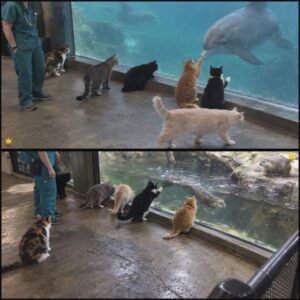
For months, the cats at the small local shelter watched people walk past their cages without stopping. Every morning brought the same routine. Volunteers arrived, cleaned the kennels, prepared food, changed water, and spent as much time as possible giving attention to the animals waiting for homes. Some cats were adopted within days. Others needed only a few weeks before someone finally fell in love with them. But a particular group seemed to remain invisible. They were older. They were no longer tiny kittens with oversized eyes and endless energy. Some had spent months waiting behind shelter doors, watching younger animals arrive and leave while they remained behind. The staff knew these cats had wonderful personalities. They knew which ones loved being held, which ones chased toys across the room, which ones followed volunteers from one side of the shelter to another. But potential adopters often saw only their age. People wanted kittens. They wanted animals that looked young and energetic. The older cats were repeatedly overlooked. Eventually, the shelter staff began asking themselves a difficult question: What if people simply needed to see these cats somewhere other than inside a cage? What if the problem wasn’t the cats at all, but the way people were meeting them? That question eventually led to an unusual idea. Instead of waiting for adopters to come to the shelter, perhaps the shelter could take the cats somewhere people would never expect to see them.
AN UNUSUAL FIELD TRIP
The idea was simple but unusual. The shelter contacted a nearby aquarium and asked whether the cats could visit as part of a special promotional and enrichment event. After discussions between the two facilities, permission was granted. The cats would be transported safely, kept under supervision, and introduced to the aquarium environment without interfering with the animals already living there. On the day of the trip, the cats were placed into secure carriers and carefully transported away from the shelter. For some of them, it was their first real adventure outside the familiar walls where they had spent so much time. When they arrived, nobody knew exactly how they would react. Cats are notoriously difficult to predict. Some become frightened in unfamiliar environments. Others immediately begin investigating every new smell, sound and movement. The staff were prepared for anything. What they weren’t prepared for was how fascinated the cats would become. As the first animals were brought near the viewing areas, they encountered something completely different from anything they had experienced at the shelter. Beyond the glass, enormous shapes moved silently through blue water. Fish darted past. Bubbles rose toward the surface. Then dolphins appeared. The cats froze. For several moments, some simply stared. Their eyes followed the dolphins as they glided past the glass. One cat moved closer, seemingly trying to understand how something so large could move so effortlessly through the water. Another pawed curiously at the glass. Volunteers watched with amusement as the supposedly “quiet” shelter cats suddenly became explorers.

THEN THEY MET THE OTTERS
The dolphins were fascinating, but the otter exhibit produced an even more entertaining reaction. Otters are energetic, curious and constantly moving, and several of them appeared interested in the strange visitors standing on the other side of the glass. The cats seemed equally fascinated. Instead of retreating, they watched the otters dart around their habitat. One cat sat completely still, following every movement with intense concentration. Another appeared to mimic the otter’s movements, shifting from one side of the viewing window to the other. Volunteers began laughing as they watched the unusual interaction develop. Here were cats that had spent months being overlooked inside a shelter suddenly behaving like curious tourists. Their personalities were completely different from the quiet images people often saw in adoption listings. They were playful. Alert. Curious. Funny. They weren’t simply old cats waiting for someone to rescue them. They were individuals with preferences, quirks and enormous personalities. Staff began taking photographs. At first, the pictures were simply meant to document the special day. But the images captured something the shelter had struggled to communicate for months. They showed the cats doing something unexpected. They were experiencing something new, and they looked genuinely engaged with the world around them. When the photographs were later shared online, nobody at the shelter expected what happened next.
PEOPLE FINALLY STARTED NOTICING THEM
The photographs spread through the local community far faster than anyone anticipated. People who had never visited the shelter began sharing the images. Friends tagged friends. Animal lovers commented on the cats’ expressions. Some joked about the animals apparently becoming fascinated by their aquatic neighbors. Others simply wanted to know who the cats were. And then something much more important began happening. People started asking whether the cats were available for adoption. The shelter staff could hardly believe it. For months, they had tried to convince people that these animals were wonderful companions. Now strangers were contacting them because they had seen photographs of the cats on an aquarium adventure. One person asked about a particular older cat who had been waiting for months. Another wanted to know whether the cat staring at the otters was still available. Suddenly, the animals who had been overlooked were receiving attention. The shelter’s adoption staff began answering messages and arranging meetings. Potential adopters were no longer looking at a photograph of an older cat sitting quietly inside a kennel. They had already seen something different. They had seen personality. They had seen curiosity. They had seen an animal capable of turning an ordinary day into an adventure.
THE CATS GOT A SECOND CHANCE
As adoption inquiries increased, the shelter began scheduling visits. Families who had originally planned to adopt kittens started considering older cats instead. That mattered enormously. Older shelter animals often face a difficult cycle. The longer they remain at a shelter, the easier it is for visitors to overlook them. Their presence becomes familiar, almost invisible. A kitten arrives and immediately attracts attention, while the older animals remain in the background. The aquarium photographs interrupted that pattern. Suddenly, people had a reason to stop and ask questions. They wanted to meet the personalities they had seen online. One by one, the cats began meeting potential families. Some were adopted quickly. Others required more time, but the attention continued. The staff were thrilled. They had originally planned the field trip simply to provide enrichment and a memorable experience for animals that had spent too much time inside the shelter. They never imagined the trip could change their adoption prospects. Yet that is exactly what appeared to happen. The cats had finally been given an opportunity to be seen as something more than shelter residents. They became the stars of an unexpected adventure.

THE DAY OUTSIDE THE SHELTER CHANGED EVERYTHING
There was an important lesson hidden inside those aquarium photographs. People often make decisions based on first impressions. A cat sitting quietly behind a cage door may appear shy or uninterested. An older animal may be dismissed simply because it is no longer a kitten. But give that same animal a new environment, a chance to explore and a reason to show its personality, and the picture can change completely. That was what happened during the aquarium visit. The cats weren’t being presented as perfect animals. They were simply being themselves. One stared at dolphins. Another investigated the glass. Others became fascinated by the otters. Their reactions were funny because they were authentic. They weren’t performing for potential adopters. They were simply experiencing something new. And people responded to that authenticity. The photographs allowed strangers to imagine what life with those cats might actually feel like. Not a sad rescue story. Not a charity obligation. A relationship with a curious, funny, affectionate animal that still had plenty of life ahead. The field trip didn’t magically change the cats. They had always possessed those personalities. What changed was the number of people who finally got the chance to see them.
SOMETIMES ALL AN ANIMAL NEEDS IS TO BE SEEN
By the time the adoption applications began arriving, shelter workers realized that the unusual field trip had accomplished something far bigger than they originally intended. They had wanted to give a few overlooked cats a memorable afternoon. Instead, they had given those animals something even more valuable: visibility. The cats that had spent months waiting for someone to notice them were suddenly being talked about throughout the community. Families were asking questions. Volunteers were sharing stories. Potential adopters were making appointments. And the cats finally had opportunities to meet people who might become their forever families. There is something especially moving about that kind of transformation because nothing about the animals themselves needed to change. They didn’t need to become younger. They didn’t need to become more beautiful. They didn’t need to learn a new trick or pretend to be something they weren’t. They simply needed someone to look closely enough to see who they already were. The aquarium trip gave them that opportunity. For one unforgettable day, the shelter cats became tourists. They watched dolphins. They investigated otters. They explored a world completely different from their familiar surroundings. And while they were busy discovering a new environment, something unexpected was happening outside the glass. People were discovering them. The staff had hoped to give the cats one special day away from the shelter. Instead, that single adventure may have opened the door to the thing they had been waiting for all along: a home. Sometimes a second chance doesn’t arrive with a grand rescue or a dramatic transformation. Sometimes it begins with a carrier, a field trip, a curious cat staring through aquarium glass—and one person finally stopping to say, “I want to meet that one.”