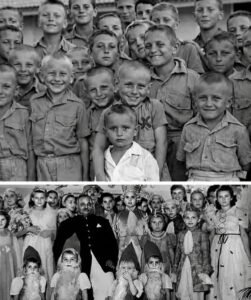
A Childhood Stolen by War
Imagine being a child who has forgotten what it feels like to sleep without fear.
Imagine waking each morning wondering whether there will be enough food to survive another day, whether your parents will return, or whether you will ever see your homeland again.
For hundreds of Polish children during World War II, these were not imaginary fears. They were the realities of their everyday lives.
After the Soviet Union occupied eastern Poland in 1939, large numbers of Polish citizens were deported to remote settlements and labor camps across Soviet territory. Families were separated from their homes, communities, and everything familiar.
Children suffered alongside adults. Hunger, disease, exhaustion, and brutal living conditions claimed countless lives.
Some lost their fathers. Others watched their mothers weaken until they could no longer stand. Many became orphans before they were old enough to understand what the word truly meant.
When an agreement between the Polish government-in-exile and the Soviet Union opened the possibility of evacuation in 1941, thousands of Polish civilians began an extraordinary journey toward freedom.
For the children, however, escaping Soviet territory was only the beginning.
They traveled through unfamiliar lands, often weakened by malnutrition and illness. Many eventually reached Iran, where Polish relief organizations and international supporters worked to provide shelter and assistance.
But the war had displaced so many people that finding permanent refuge remained a tremendous challenge.
These children needed more than temporary food and medicine.
They needed a place where childhood could begin again.

An Unexpected Protector in India
Thousands of miles away, in the princely state of Nawanagar in western India, lived a ruler named Jam Sahib Digvijaysinhji Ranjitsinhji Jadeja.
He was the Maharaja of Nawanagar, a respected figure whose position gave him both influence and the ability to offer meaningful assistance.
Unlike the European leaders whose names dominated wartime headlines, the Maharaja was not commanding armies across continents.
Yet his response to the suffering of Polish refugees would leave a legacy far beyond the borders of his kingdom.
As efforts developed to find safe accommodation for displaced Polish children, the Maharaja agreed to welcome a large group into his state.
The decision was remarkable.
India was itself living through the pressures of World War II. Resources were strained, political tensions were rising, and the future remained uncertain.
Providing shelter for hundreds of traumatized children meant arranging accommodation, food, medical treatment, education, and long-term care.
It was not simply a matter of opening a gate.
It required building an entirely new community.
And the Maharaja was willing to help make it happen.
The story is often retold as a dramatic confrontation in which hundreds of children were stranded aboard a ship after being refused entry at British-controlled ports. Although this version has become popular online, the precise details of that episode are not firmly established in the historical record.
What is well documented is the Maharaja’s decision to shelter Polish refugee children in Nawanagar and the extraordinary care they received there.
That documented act of generosity is powerful enough without embellishment.
Balachadi: A Home Far from Home
In 1942, a residential settlement for Polish children was established at Balachadi, near Jamnagar, in present-day Gujarat.
The camp eventually accommodated hundreds of young refugees, with approximately 650 to 1,000 children associated with the settlement in various historical accounts.
For children who had survived displacement, hunger, and devastating personal losses, Balachadi represented something almost unimaginable.
Stability.
Instead of facing another exhausting journey, they could finally unpack their belongings.
Instead of wondering where they would sleep tomorrow, they had beds.
Instead of living under the constant shadow of uncertainty, they could attend lessons, play games, and make friends.
The Maharaja understood that these children had already lost their homes. He did not want them to lose their identity as well.
The settlement preserved important elements of Polish life.
Polish teachers helped the children continue their education in their own language. Cultural activities allowed them to remember their homeland. Religious observances and traditional celebrations helped maintain a connection to the families and communities they had left behind.
For children whose lives had been shaped by separation, these familiar traditions carried enormous emotional significance.
A Polish song was more than music.
A familiar meal was more than nourishment.
A Christmas celebration thousands of miles from Poland was more than a holiday.
Each represented a reminder that their past had not been erased and that they still belonged somewhere.
The Man the Children Called “Bapu”
The Maharaja did not remain a distant benefactor whose generosity existed only on paper.
He visited the settlement, spent time with the children, and attended their celebrations.
To the young refugees, he became known affectionately as the Good Maharaja.
Historical accounts describe how he reassured the children that they were no longer alone. He explained that he was known as “Bapu,” meaning father, to the people of Nawanagar, and that the Polish children were now included in that family.
For young people who had lost their parents, such reassurance carried extraordinary meaning.
The Maharaja’s compassion was visible in practical details.
He helped develop the settlement and supported efforts to improve its surroundings. Trees, flowers, and fruit plants were introduced to make the environment more welcoming.
There were classrooms, medical facilities, communal spaces, and areas for recreation.
The children were not expected merely to survive.
They were encouraged to grow.
And slowly, something beautiful began to happen.
Children who had once known only fear started laughing again.
They played outdoors. They formed friendships. They celebrated birthdays and holidays.
For the first time in years, many could think about tomorrow without immediately imagining another tragedy.
The settlement was not a magical place where every painful memory disappeared. Trauma does not vanish simply because circumstances improve.
But it offered something essential to recovery: a community where children could experience ordinary life again.
A Little Poland Beneath the Indian Sun
Perhaps one of the most extraordinary aspects of Balachadi was its determination to preserve Polish culture.
The Maharaja could have provided shelter and expected the children to adapt entirely to their new surroundings.
Instead, he supported an environment where they could remain connected to their homeland.
Lessons were conducted in Polish. Children learned about their history and traditions. They participated in cultural performances and religious observances.
Christmas was particularly meaningful.
Imagine children celebrating a Polish Christmas beneath the warm skies of India.
Thousands of miles separated them from the snowy landscapes and familiar streets of their homeland.
Some had no surviving parents to celebrate with.
Others did not know whether their relatives were alive.
Yet for a few precious hours, familiar songs, prayers, and traditions helped bridge the distance between the lives they had lost and the lives they were beginning to rebuild.
These celebrations were not simply nostalgic rituals.
They reminded the children that they had a history worth remembering and a future worth protecting.
Balachadi became a remarkable meeting place between two cultures.
Indian generosity helped preserve Polish identity.
And Polish children learned that compassion could cross borders, religions, and languages.
A Rescue That Inspired Others
The Maharaja’s contribution extended beyond providing land and personal assistance.
He encouraged other Indian princes to support the Polish refugees financially.
A relief fund helped sustain the children’s settlement, demonstrating that humanitarian responsibility could be shared across communities.
The effort was supported by Polish organizers, teachers, caregivers, and relief workers, alongside Indian benefactors.
This cooperation was vital.
Feeding hundreds of children, maintaining medical services, and organizing schooling during wartime required consistent resources and careful administration.
The Maharaja’s generosity inspired a broader network of assistance rather than operating in isolation.
In time, thousands of Polish refugees found shelter in different settlements across India, including the larger community at Valivade.
Balachadi became one of the most memorable symbols of this humanitarian effort.
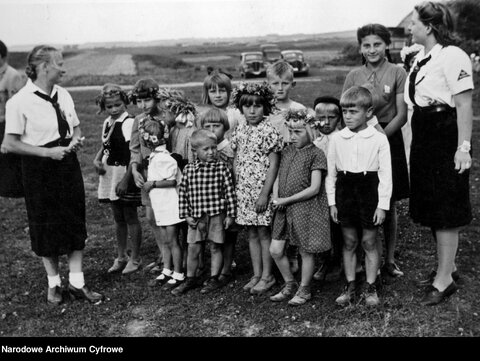
When the Time Came to Say Goodbye
As World War II ended, the future of the Polish refugee communities changed.
The conflict had devastated Poland, and the country’s postwar political circumstances created new uncertainties for those who had been displaced.
The children at Balachadi could not remain there forever.
Some were transferred to other Polish refugee settlements. Others eventually began new lives in different countries.
Leaving Balachadi meant another painful separation.
But this departure was different from the forced journeys that had defined their earlier childhoods.
They were no longer simply frightened children escaping persecution.
They had received education, care, and opportunities to rebuild their confidence.
They carried memories of teachers, friends, celebrations, and a remarkable Indian ruler who had treated them with dignity.
For many, the Maharaja would remain a beloved figure throughout their lives.
The settlement had given them something that could never be measured only in money or buildings.
It had restored their sense of belonging.
A Kindness Poland Never Forgot
Jam Sahib Digvijaysinhji died in 1966, but his legacy continued to grow.
In Poland, he became remembered as the Good Maharaja.
Warsaw established a square honoring him, and a monument commemorates his extraordinary contribution to Polish history.
In 2016, the Polish parliament formally honored his memory, recognizing the assistance he provided to Polish children during World War II.
His story remains an enduring symbol of friendship between Poland and India.
There is something deeply moving about that legacy.
A ruler in India offered sanctuary to children from a country thousands of miles away.
Those children grew older, built lives, and carried the memory of his generosity into the future.
Decades later, a European nation continued to honor a man whose greatest remembered achievement was not a military victory or territorial conquest.
It was giving vulnerable children a home.
The Greatest Power Is the Power to Protect
History often remembers war through its generals, battles, treaties, and victories.
We learn the names of those who commanded armies and reshaped borders.
But some of history’s most important decisions were made far from battlefields.
They happened when ordinary human suffering demanded a response.
In 1942, hundreds of Polish children desperately needed safety.
Jam Sahib Digvijaysinhji had the opportunity to help, and he chose to act.
He could not undo their suffering.
He could not return their lost parents or restore the childhood years that war had stolen.
But he could provide food, shelter, education, friendship, and a place where they were treated as human beings rather than unwanted refugees.
And that changed their lives.
His story reminds us that compassion is not measured only by the size of a donation or the power of a title.
Sometimes it is measured by whether a frightened child has somewhere safe to sleep.
Whether a hungry child receives a meal.
Whether a child who has lost a family can once again feel that someone cares.
The Good Maharaja did not need to share the children’s nationality, language, or religion to recognize their humanity.
He simply understood that their suffering mattered.
More than eight decades later, that lesson remains as relevant as ever.
A king may be remembered for the land he ruled. But Jam Sahib Digvijaysinhji is remembered for the children he protected.
And perhaps that is the most beautiful kind of legacy anyone can leave behind.
If you had never heard the story of the Good Maharaja before today, do you believe acts of kindness like his deserve a greater place in the history
books?
