There is no denying the beauty of historic architecture.
You can learn a lot about history by looking around an older house. Charming features like phone niches, built-in ironing boards, and milk delivery doors reveal a great deal about the people and technology of bygone days.
If you have ever inspected an older staircase, you may have noticed details like brass corner protectors or metal stair rods. At first glance, these features might seem purely decorative. But each one tells a story—and many served practical purposes that are still relevant today.
Read on to take a closer look at these unique staircase features, discover their purpose, and find staircase ideas for your next DIY project.
1. Dust Corners (Stair Corner Guards)
Before vacuum cleaners were invented, sweeping dust out of stair corners was a major headache. Brooms simply could not reach the tight angles where the staircase met the wall, leaving dust and debris to accumulate in unsightly piles.
Stair corner dust guards—also known as dust corners—were created in the 1890s to solve this problem. These small metal or ceramic guards were installed at the base of each stair riser, creating a smooth, curved surface that allowed dust to be swept away easily.
Purpose and Charm
| Function | Why It Mattered |
|---|---|
| Practical | Eliminated dust-trapping corners; made sweeping easier |
| Protective | Prevented dirt from embedding in wood corners |
| Decorative | Added charm and elegance to wooden staircases |
Today, dust corners are less about necessity and more about preserving historic character. But they also offer a practical solution for awkward corners elsewhere in the home—such as between a wall and fireplace molding, or in tight hallway intersections.
Where to Find Dust Corners
| Retailer | What They Offer |
|---|---|
| House of Antique Hardware | Period-appropriate brass and iron guards |
| Amazon | Variety of styles and finishes |
| Etsy | Unique, handmade, and vintage-inspired designs (including star-spangled options) |
DIY Idea
If you have a historic home—or simply love the character of one—consider adding dust corners to your staircase. They are easy to install with small nails or adhesive and instantly elevate the charm of any wooden stairway.
2. Stair Rods
If you have ever seen an old photograph of a grand staircase with a carpet runner held in place by polished metal rods, you have seen stair rods in action.
According to The Victorian Emporium, a renovation company specializing in period homes, stair rods were originally used to secure runner carpets to wooden staircases. The rods were inserted through the carpet loops or fabric and held in place by brackets on each side of the stair tread.
Purpose and Evolution
| Era | Function |
|---|---|
| Victorian era | Secured carpet runners; prevented slipping and shifting |
| Modern era | Mostly decorative; carpet is now typically stapled to the subfloor |
While the practical need for stair rods has diminished—modern carpet installation relies on stapling and tack strips—their visual appeal has not. Stair rods continue to be a popular design element for homeowners seeking a classic, traditional look.
Where to Find Stair Rods
| Retailer | What They Offer |
|---|---|
| Specialty hardware stores | Period-authentic designs |
| Rug manufacturers | Matching rods for runners |
| Wayfair | Wide selection of styles and finishes |
| Amazon | Affordable options for DIY installation |
Design Tip
Stair rods are available in a range of finishes, including:
-
Brass (polished or antique)
-
Nickel
-
Bronze
-
Black iron
-
Chrome
Choose a finish that complements your existing hardware—such as doorknobs, hinges, and light fixtures—for a cohesive look.
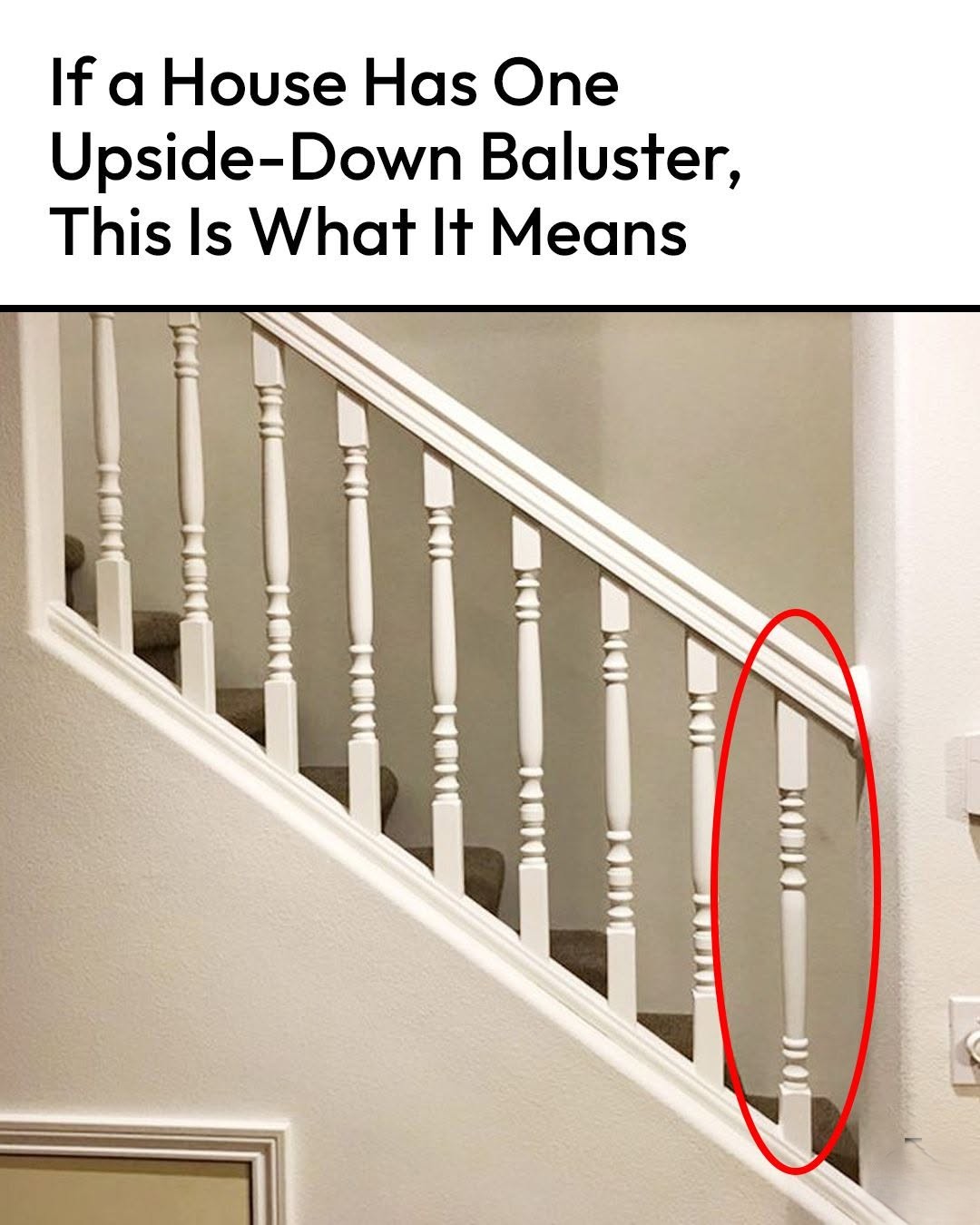
3. One Upside-Down Baluster
A baluster—also called a spindle—is the vertical post that supports the handrail on a staircase. In most homes, all balusters are installed identically, standing upright in perfect alignment.
But in some historic homes, you may notice something unusual: one baluster is installed upside down.
Why?
| Belief | Origin |
|---|---|
| “Only God’s creations are perfect” | Builders intentionally included an imperfection to acknowledge human limitation |
| Superstition (English origin) | An upside-down baluster prevents the devil from climbing the stairs and taking anyone on their deathbed |
| Apprentice’s mark | Some theories suggest it was a hidden signature of the craftsman |
Whatever the exact origin, the upside-down baluster is almost always linked to a higher power or superstition. It was a quiet acknowledgment that no human creation is flawless, and it served as a subtle nod to forces beyond the builder’s control.
Where to Find It
You are unlikely to find an upside-down baluster in a new home—unless a homeowner has intentionally installed one for historic authenticity. In historic homes, look closely at the staircase:
-
On the main stair run
-
Often on a back stair or servants’ staircase
-
Sometimes hidden in plain sight on the most visible baluster
DIY Idea
If you love the charm and storytelling of this tradition, consider installing one upside-down baluster in your own staircase—even in a modern home. It is a small, personal detail that adds history, humor, and conversation to your space.
Summary Table: 3 Unique Staircase Features
| Feature | Purpose | Found In | Modern Use |
|---|---|---|---|
| Dust Corners | Prevented dust accumulation in stair corners | Stair risers, near walls | Decorative; protects awkward corners |
| Stair Rods | Secured carpet runners | Across each stair tread | Decorative; classic aesthetic |
| Upside-Down Baluster | Superstition; acknowledgment of imperfection | One baluster in the staircase | Historic authenticity; conversation piece |
Final Thoughts
Historic staircases are more than just functional structures. They are storytellers, preserving the practical solutions, superstitions, and craftsmanship of past generations.
-
Dust corners speak to a time before electricity and vacuum cleaners, when sweeping was a daily chore.
-
Stair rods remind us of an era when carpet was an investment worth protecting.
-
The upside-down baluster invites us to reflect on humility, faith, and the human touch behind every structure.
Whether you are restoring a historic home, adding character to a modern one, or simply appreciating the beauty of old architecture, these three unique staircase features offer a glimpse into the past—and plenty of inspiration for the future.