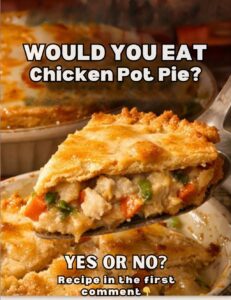
There are some foods that don’t just fill your stomach—they settle you. They quiet the room. They make people stop talking for a minute because everyone’s too busy eating. Old-fashioned chicken pot pie with a crust on top and bottom was one of those meals.
If you grew up before frozen dinners took over freezer space and recipes were still passed down on index cards, you already know this truth:
A chicken pot pie without a bottom crust isn’t really a pot pie. It’s just chicken stew wearing a pastry hat.
Modern recipes will tell you the bottom crust is “optional.” They’ll say it gets soggy. They’ll warn you it’s tricky. They’ll suggest puff pastry on top and call it rustic. But anyone over 65 knows better. That soft, gravy-soaked bottom crust—barely holding together, rich with chicken stock and butter—was the whole point.
This is the chicken pot pie of Sunday afternoons, of leftover roast chicken, of flour-dusted countertops and rolling pins that lived in a drawer. This is the version that took time, patience, and a little faith that things didn’t need to be perfect to be good.
Let’s go back there.
When Pot Pie Was a Leftover Meal, Not a Shortcut
Chicken pot pie didn’t start as a “recipe.” It started as a solution.
In the days before grocery store rotisserie chickens and boxed pie crusts, families roasted a whole bird because it was economical. Sunday dinner meant roast chicken with potatoes and gravy. Monday meant cold chicken sandwiches. And by Tuesday, whatever meat was left—dark, light, bits and pieces—was destined for a pot pie.
Nothing was wasted. Not the chicken. Not the broth. Not even the drippings scraped from the pan.
That’s why early pot pies were hearty, thick, and fully enclosed in pastry. The crust wasn’t decoration—it was sustenance. Flour, fat, and water were cheap and filling, and when baked beneath a rich gravy, that bottom crust became something closer to a dumpling than a pie shell.
And nobody complained.
Why the Bottom Crust Mattered So Much
Today’s food culture obsesses over “flaky.” But back then, flakiness was secondary to comfort.
The bottom crust in a traditional chicken pot pie was expected to soften. It soaked up gravy. It sagged slightly under the weight of the filling. And when you scooped out a slice, the bottom often stayed behind in the pan—something people fought over with their forks.
That bottom crust:
Absorbed chicken stock, cream, and butter
Balanced the salt and richness of the filling
Turned leftovers into something even better the next day
Grandmas knew how to manage it, too. They par-baked when necessary. They used thick gravies. They let the pie rest before cutting. And most importantly—they didn’t panic if it wasn’t picture-perfect.
A good pot pie was judged by how quiet the table got, not how clean the slice looked.
The Filling: Thick, Slow, and Unapologetic
Old-fashioned chicken pot pie filling was never soupy. It was spoonable, yes—but just barely.
The gravy started with fat. Sometimes butter. Sometimes chicken drippings saved in a coffee cup in the fridge. Flour was cooked until it lost that raw smell, then broth was added slowly, stirred patiently, and simmered until it thickened enough to coat the back of a spoon.
Vegetables were simple:
Carrots, diced small
Celery, for flavor more than texture
Onion, always
Peas added at the end, if at all
Potatoes were optional and regional. Some families swore by them. Others said potatoes belonged on the plate, not in the pie.
What mattered most was seasoning. Salt. Black pepper. Sometimes a pinch of poultry seasoning or dried thyme. No garlic powder. No wine. No shortcuts.
This was food meant to taste like chicken.
The Crust: Not Fancy, Just Faithful
This wasn’t a buttery French pastry. It was a working crust.
The dough was rolled thin enough to cook through, but thick enough to hold its own under gravy. Lard was common. Shortening too. Butter if you had it and felt generous.
The bottom crust lined the pan and went in first. Sometimes it was docked. Sometimes it was lightly baked. Sometimes it went in raw and trusted the oven to do its job.
The top crust sealed everything in, crimped by hand, vented with a knife, brushed with milk or beaten egg if someone remembered.
And then it baked until the house smelled like supper.
Old-Fashioned Double Crust Chicken Pot Pie Recipe
Ingredients
For the Filling
3 cups cooked chicken, chopped or shredded
1/3 cup butter or chicken fat
1/3 cup all-purpose flour
2 cups chicken broth (preferably homemade)
1 cup milk or light cream
1 cup diced carrots
1/2 cup diced celery
1/2 cup diced onion
1/2 to 1 cup peas (optional)
1 teaspoon salt (or to taste)
1/2 teaspoon black pepper
1/4 teaspoon dried thyme or poultry seasoning (optional)
For the Double Crust
2 1/2 cups all-purpose flour
1 teaspoon salt
1 cup cold butter, lard, or shortening
6–8 tablespoons ice water
Step-by-Step Instructions (The Way It Was Done)
Step 1: Make the Crust First
In a large bowl, mix flour and salt. Cut in the fat until the mixture resembles coarse crumbs. Add ice water one tablespoon at a time until the dough just comes together. Divide into two disks, wrap, and refrigerate at least 30 minutes.
Step 2: Start the Filling
In a large skillet or saucepan, melt butter or chicken fat over medium heat. Add carrots, celery, and onion. Cook until softened but not browned.
Step 3: Build the Gravy
Sprinkle flour over the vegetables and stir constantly for 2–3 minutes. Slowly add chicken broth, stirring to prevent lumps. Add milk or cream and simmer until thickened.
Step 4: Season and Finish
Add chicken, salt, pepper, and optional herbs. Stir gently. Add peas last. Remove from heat and let cool slightly.
Step 5: Prepare the Bottom Crust
Roll out one disk of dough and line a deep pie dish. For extra insurance against sogginess, bake at 375°F (190°C) for 8–10 minutes until just set.
Step 6: Assemble
Pour filling into the crust. Roll out the top crust and place over filling. Crimp edges, cut vents, and brush with milk or egg.
Step 7: Bake
Bake at 375°F for 45–50 minutes, until golden and bubbling. Let rest at least 15 minutes before serving.

Why Letting It Rest Matters
This is where many modern cooks go wrong.
Cutting into a chicken pot pie straight from the oven guarantees a flood of gravy and a collapsed bottom crust. Grandmas knew better. They let it sit on the counter while everyone washed up, set the table, or said grace.
That resting time allows:
The gravy to thicken further
The bottom crust to firm slightly
The flavors to settle
It also makes the second slice even better than the first.
The Next-Day Pot Pie Rule
Here’s a truth nobody writes in cookbooks:
Chicken pot pie is better the next day.
Cold from the fridge or reheated slowly, that bottom crust turns tender and rich, the gravy thickens into something almost custardy, and the flavors deepen.
Many people preferred leftovers. Some even made pot pie specifically for leftovers.
That’s not a flaw. That’s wisdom.
Why This Version Faded Away
So why did the bottom crust disappear?
Busy schedules shortened cooking time
Convenience foods replaced leftovers
Food photography favored clean slices
Restaurants wanted consistency
The soggy bottom didn’t photograph well. It didn’t plate neatly. And it required patience.
But comfort food isn’t supposed to be neat.
Bringing It Back—On Purpose
Making a true double-crust chicken pot pie today is a quiet act of rebellion. It says you value tradition over trends. That you’re willing to slow down. That you understand some of the best things in the kitchen can’t be rushed—or optimized.
And if the bottom crust turns a little soft?
Good. That means you did it right.
Frequently Asked Questions
Can I skip par-baking the bottom crust?
You can, but par-baking helps prevent raw dough. Grandmas often judged by feel and experience.
Why is my bottom crust soggy?
A soft bottom crust is traditional. If it’s raw, the filling may have been too thin or the pie not baked long enough.
Can I use leftover turkey instead of chicken?
Absolutely. This recipe was made for leftovers of all kinds.
Can I freeze double-crust chicken pot pie?
Yes—freeze before baking for best texture.
What size pie dish works best?
A deep 9-inch pie dish is ideal. Shallow dishes don’t support the filling.