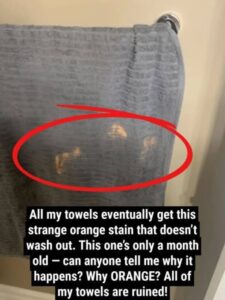
Strange orange or light-colored marks on towels are most commonly caused by benzoyl peroxide. This acne-fighting ingredient is found in products like PanOxyl, Clearasil, and Neutrogena, as well as prescription creams. While effective on skin, it can damage fabric.
Benzoyl peroxide is a strong oxidizing agent, meaning it works similarly to bleach when it comes into contact with textiles. Instead of cleaning the fabric, it strips away dye.
On dark towels—such as black, navy, or charcoal—the damaged areas often appear orange, yellow, or pink. This happens because darker pigments break down first, revealing lighter base tones underneath.
A simple way to identify the cause is by color contrast. If the mark is lighter than the towel, bleaching is likely responsible. If the mark is darker, it’s probably a traditional stain.
Unfortunately, these light patches cannot be washed out. The dye has already been chemically removed from the fibers, and no detergent or scrubbing can restore it.
In some cases, residue left on towels can transfer in the wash and affect other items. For this reason, separating affected towels from other laundry can help prevent additional damage.
Although benzoyl peroxide is the usual culprit, other possibilities exist. Rust from aging pipes can leave reddish-brown streaks, and the bacteria Serratia marcescens may create a pink film that typically wipes away with cleaning.
To prevent future damage, consider using white towels for skincare routines, rinsing thoroughly after applying acne treatments, or switching to alternatives like salicylic acid. Towels that are already discolored can still be repurposed as cleaning cloths or gym towels.