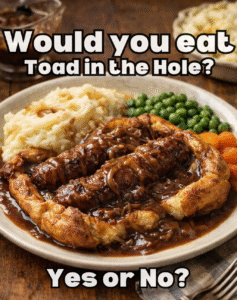
There are dishes that whisper comfort, and then there are dishes that announce it the moment they hit the table. Toad in the Hole is firmly in the second camp. It arrives puffed and golden, steam rising, sausages peeking out like islands in a sea of baked batter, just begging for a ladle of deep brown onion gravy.
Despite what the name might suggest to American ears, this is not a breakfast. It’s a proper, sit-down, knife-and-fork supper—the kind of meal that once anchored families to the table at the end of long, cold days. No frills. No fuss. Just food that fills you up and makes the house feel warmer.
This is the sort of recipe that doesn’t rush. It comes from kitchens where ovens were already hot, where gravy simmered while conversation drifted, and where feeding people well mattered more than plating things prettily. If British comfort food has a heart, Toad in the Hole is beating right in the middle of it. Groceries
A Name That Sticks (Even If It Sounds a Bit Mad)
Let’s address the elephant—or rather, the toad—in the room.
No, there are no amphibians involved.
The name dates back centuries, and like many old British dishes, it reflects a sense of humor and thrift more than elegance. One popular explanation is that the sausages poking up through the batter resembled little toads peeking out of holes in the mud. Another theory suggests the name simply stuck because it was memorable—and in a time when many families ate variations of the same few dishes, memorability mattered.
What we do know is that versions of meat baked in batter were eaten in England as early as the 1700s. Originally, cheaper cuts of meat—or even scraps—were used, suspended in batter to stretch them further. Sausages came later, once they became more affordable and widely available.
Either way, the name survived because the dish survived. And it survived because it works.
Why This Dish Meant So Much
Toad in the Hole wasn’t about showing off. It was about making something hearty out of very little.
A few sausages.
Some flour.
Milk.
Eggs.
Onions.
Stock.
That’s it.
In working-class homes, especially during hard times, batter was a blessing. It turned a modest amount of meat into a filling meal that could feed a whole family. The oven did most of the work, and the result felt substantial—almost celebratory—without being expensive.
This is why the dish became deeply tied to Sunday suppers, pub menus, and home kitchens. It was dependable. You could count on it. And once you poured the gravy over, it felt generous, even luxurious.
That emotional memory still clings to the dish today. People don’t just crave Toad in the Hole for the flavor—they crave it for the feeling.
The Sausages Matter (A Lot)
If there’s one place not to cut corners, it’s the sausages.
Traditionally, thick, pork-forward British sausages are used—especially Cumberland-style sausages, known for their coarser texture and peppery seasoning. These sausages stand up well to baking and release flavorful fat that seasons the batter as it cooks.
Thin sausages won’t do. They dry out. They disappear into the batter. What you want are sausages that stay juicy, assertive, and unmistakably present.
Before the batter ever touches the pan, the sausages are usually browned first. This step does two important things:
It locks in flavor and texture.
It ensures the sausages are fully cooked by the time the batter has puffed and set.
Skipping this step is a common mistake—and one that leads to pale, soggy results.
Yorkshire Pudding Batter: Simple, But Unforgiving
Yorkshire pudding batter looks humble on paper: flour, eggs, milk, salt. But it has rules, and it demands respect.
The key to that dramatic rise—the kind that towers up around the sausages—is heat. The pan must be screaming hot. The fat must be shimmering. The batter must hit the pan and sizzle instantly.
Cold pans make flat puddings. Lukewarm ovens make disappointment.
The batter itself should be rested. This allows the flour to hydrate fully and the gluten to relax, which leads to a better rise. Old cooks didn’t measure resting time with timers; they mixed the batter early and simply waited until everything else was ready.
That patience shows in the final dish.
Onion Gravy: The Soul of the Plate
If the sausages are the heart and the batter is the body, onion gravy is the soul.
A proper onion gravy is not rushed. Onions are sliced and cooked slowly until they turn soft, sweet, and deeply golden. Stock—usually beef—adds richness, and a touch of flour or starch thickens it just enough to cling without turning gluey.
This gravy is poured generously, unapologetically. It seeps into the batter, coats the sausages, and pools on the plate. There should be enough that no bite goes dry.
In many homes, the gravy pot was passed first—before anyone even picked up a fork.
What It Was Served With
Toad in the Hole rarely stood alone.
Classic sides included:
Creamy mashed potatoes
Steamed peas
Carrots or cabbage
Roasted root vegetables
These weren’t afterthoughts. They rounded out the meal and made it stretch even further. A single pan of sausages and batter, paired with vegetables, could feed a table full of people without complaint.
Leftovers—if there were any—were eaten cold the next day or reheated with more gravy.
Nothing was wasted.
A Dish That Belongs to Cold Weather
This is not summer food. Groceries
Toad in the Hole belongs to rainy evenings, dark afternoons, and kitchens fogged with steam. It’s the kind of meal that makes you want to shut the curtains early and eat slowly.
There’s something grounding about it. Something that pulls you back into your body and reminds you that food can be simple and still feel deeply satisfying.
That’s why it endures.
Traditional Toad in the Hole Recipe
Ingredients
For the Sausages and Batter
6 thick pork sausages (Cumberland-style if possible)
1 cup all-purpose flour
1 cup milk
3 large eggs
½ teaspoon salt
¼ teaspoon black pepper
2 tablespoons beef drippings or vegetable oil
For the Onion Gravy
2 large onions, thinly sliced
2 tablespoons butter
2 cups beef stock
1 tablespoon all-purpose flour
Salt and pepper to taste
Instructions
Prepare the Batter
In a bowl, whisk together the flour, salt, and pepper. Add the eggs and milk, whisking until smooth. Set aside to rest while you prepare the rest of the dish.
Brown the Sausages
Preheat the oven to 425°F (220°C). Heat a skillet and brown the sausages on all sides. Remove and set aside.
Heat the Pan
Add the drippings or oil to a baking dish and place it in the oven until very hot.
Add Sausages and Batter
Carefully place the sausages in the hot dish. Immediately pour the batter around them. Return to the oven.
Bake
Bake for 30–35 minutes without opening the oven door, until puffed and deeply golden.
Make the Gravy
While baking, cook onions slowly in butter until golden. Sprinkle with flour, stir, and add stock gradually. Simmer until thickened.
Serve
Slice and serve with mashed potatoes, vegetables, and plenty of onion gravy.

Why It Still Matters
In a world full of fast food and complicated recipes, Toad in the Hole reminds us that good cooking doesn’t need to be flashy. It needs to be honest. Groceries
This dish fed families through lean times. It warmed kitchens that had little else to offer. And today, it still has the power to make people feel taken care of.
That’s not nostalgia for nostalgia’s sake. That’s food doing what it’s always done best.
Frequently Asked Questions
Is Toad in the Hole a breakfast dish?
No. Despite the batter, it’s a traditional British supper, served hot with gravy and vegetables.
Can I use different sausages?
Yes, but thick pork sausages work best. Thin sausages tend to dry out.
Why didn’t my batter rise?
The pan likely wasn’t hot enough, or the oven door was opened too early.
Can I make it ahead of time?
It’s best fresh, but leftovers can be reheated gently in the oven.
Is it the same as Yorkshire pudding?
The batter is the same, but Yorkshire pudding is usually served on its own or with roast beef, not baked with sausages.