A 1960s Sunday Night Supper That Filled the House With Comfort
There are some dishes that never needed advertising. They didn’t trend, they weren’t plated for cameras, and nobody called them “viral.” They simply showed up, week after week, because they worked. Stuffed bell peppers were one of those meals.
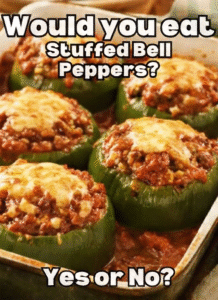
If you grew up anywhere near an American kitchen in the 1950s or 1960s, chances are you remember them well. Green bell peppers—almost always green back then—stood upright in a baking dish like little bowls, filled to the brim with ground beef, rice, onions, and tomato sauce. They baked slowly in the oven while the house filled with a warm, savory smell that told everyone Sunday supper was on its way.
This wasn’t flashy food. It was practical food. The kind of meal a mother could make while keeping an eye on kids finishing homework or playing quietly in the next room. The kind of recipe that stretched a pound of meat, used pantry staples, and still managed to feel special when placed in the center of the table.
Stuffed bell peppers were dependable. They were economical without feeling cheap. Hearty without being heavy. And most of all, they were comforting in a way that only slow-baked, familiar food can be.
This is the story—and the recipe—of that classic dish, told the way it would have been remembered: warmly, patiently, and with a deep respect for the kitchens that made it possible.
Why Stuffed Bell Peppers Became a Mid-Century Favorite
To understand why stuffed bell peppers became such a staple, you have to look at how families cooked during the postwar decades. By the late 1950s and early 1960s, many households were balancing tighter budgets, growing families, and a strong emphasis on home-cooked dinners eaten together.
Bell peppers were affordable and widely available. Rice was cheap, filling, and easy to store. Ground beef, while not extravagant, felt substantial and satisfying. Tomato sauce—often canned—added flavor, moisture, and a comforting familiarity.
Put all of that together, and you had a meal that checked every box:
It looked generous on the plate
It fed a family without draining the grocery budget
It could be prepared ahead of time
Leftovers reheated beautifully
Stuffed peppers also carried a quiet elegance. Served in a casserole dish, each pepper felt like its own portion—no arguing over who got more. Everyone had “their” pepper, and that alone made supper feel orderly and fair.
A Sunday Night Tradition
Sunday nights were different. The weekend was winding down, school loomed in the morning, and there was a sense of needing something grounding before the week began. Stuffed bell peppers fit perfectly into that moment.
They weren’t rushed. The rice was cooked first. The meat was browned slowly with onions. The filling was tasted, adjusted, and spooned carefully into each pepper. Then the dish went into the oven, covered loosely, to bake until the peppers softened and the flavors melded together.
While they baked, kitchens were tidied, tables were set, and sometimes a simple dessert—gelatin salad, canned fruit, or baked apples—waited in the refrigerator.
By the time the peppers came out of the oven, they were tender but still holding their shape, their tops slightly caramelized, tomato sauce bubbling around the edges. It was the kind of meal that asked you to sit down, stay awhile, and eat slowly.
Old-Fashioned Stuffed Bell Peppers Recipe
This recipe stays true to the way stuffed bell peppers were commonly made in the 1960s—simple, reliable, and unfussy.
Ingredients
6 medium green bell peppers
1 pound ground beef
1 cup cooked white rice
1 small onion, finely chopped
1 clove garlic, minced (optional but common in later versions)
1 teaspoon salt
½ teaspoon black pepper
1 teaspoon paprika
1½ cups tomato sauce (divided)
½ cup water or beef broth
Optional additions, depending on household habits:
A pinch of sugar to soften the tomato acidity
Worcestershire sauce (½ teaspoon)
A small handful of shredded cheddar cheese for topping (more common in the late 1960s)
Step-by-Step Instructions
1. Prepare the Peppers
Wash the bell peppers and cut the tops off carefully. Remove seeds and membranes from inside, keeping the peppers whole. If needed, trim the bottoms slightly so they stand upright, but be careful not to cut through.
Bring a large pot of water to a gentle boil. Place peppers in the water for 3–4 minutes to soften slightly. Remove and set aside to drain. This step was common in mid-century kitchens to ensure tender peppers after baking.
2. Cook the Filling
In a skillet over medium heat, brown the ground beef with the chopped onion until the meat is no longer pink and the onion is soft. Drain excess fat.
Stir in cooked rice, salt, pepper, paprika, and garlic if using. Add 1 cup of the tomato sauce and mix well. Taste and adjust seasoning—this was always an important step, even if nobody called it that.
3. Stuff the Peppers
Arrange the peppers upright in a baking dish. Spoon the meat and rice mixture into each pepper, packing gently but not tightly. The filling should mound slightly at the top.
4. Add Sauce and Bake
Pour the remaining tomato sauce mixed with water or broth into the bottom of the baking dish. This keeps the peppers moist as they bake.
Cover loosely with foil and bake at 350°F (175°C) for 45 minutes. Remove foil and bake an additional 15 minutes, until peppers are tender and the tops are lightly browned.
If adding cheese, sprinkle it on during the last 10 minutes of baking.
5. Serve
Let peppers rest for a few minutes before serving. Spoon extra sauce from the dish over each pepper.
.

What Was Served Alongside
Stuffed bell peppers were usually the star of the plate, but they were rarely alone.
Common side dishes included:
Buttered white bread or dinner rolls
Green beans, often cooked with a bit of bacon or onion
Simple iceberg lettuce salad with bottled dressing
Mashed potatoes when extra filling was needed
The meal was balanced, modest, and filling—exactly what a Sunday supper was meant to be.
Little Variations From Kitchen to Kitchen
No two families made stuffed peppers exactly the same, even though the base recipe rarely changed.
Some households added:
Diced celery for texture
A splash of ketchup mixed into the tomato sauce
Extra rice when stretching the meal mattered
Others skipped pre-boiling the peppers, preferring them firmer. Some swore by green peppers only, while others welcomed red or yellow when they became more common.
And then there were the quiet substitutions—less meat during tight months, more rice during big ones. The recipe adapted without complaint, which is part of why it endured.
Why This Dish Still Matters
Stuffed bell peppers aren’t trendy, and they don’t try to be. But they represent something increasingly rare: a meal designed to be eaten together, slowly, without distraction.
They remind us of kitchens where recipes were memorized, not measured to perfection. Where dinner was dependable, even when life wasn’t. Where the goal wasn’t novelty, but nourishment.
In many ways, stuffed peppers are a reminder that good food doesn’t need reinvention. Sometimes, it just needs remembering.
Storage and Reheating
Stuffed bell peppers were famous for making excellent leftovers.
Refrigerator: Store covered for up to 4 days.
Reheating: Warm in the oven at 325°F or gently in the microwave with extra sauce.
Freezing: Fully cooked peppers can be frozen individually and reheated later, though this was less common in the 1960s.
Frequently Asked Questions
Can I make stuffed bell peppers ahead of time?
Yes. You can assemble them a day in advance, cover tightly, and refrigerate. Bake when ready to serve.
Do I have to pre-cook the peppers?
Pre-cooking helps ensure tender peppers, but you can skip it if you prefer a firmer texture. Just extend baking time slightly.
Can I use brown rice instead of white?
Traditionally, white rice was used, but brown rice works well if fully cooked before mixing.
What kind of peppers were used in the 1960s?
Green bell peppers were most common due to availability and cost. Red and yellow became popular later.
Can I make this without meat?
Yes. Many families substituted extra rice and vegetables when needed, even if it wasn’t advertised as such.
Final Thoughts
Stuffed bell peppers didn’t need to impress anyone. They just needed to show up, warm and ready, when the family gathered around the table. And they did—faithfully, quietly, and with more comfort than we sometimes realize.
If you make them today, you’re not just cooking dinner. You’re stepping into a rhythm that once defined Sunday nights across countless households. A rhythm of patience, simplicity, and care.
And sometimes, that’s exactly what we need most.